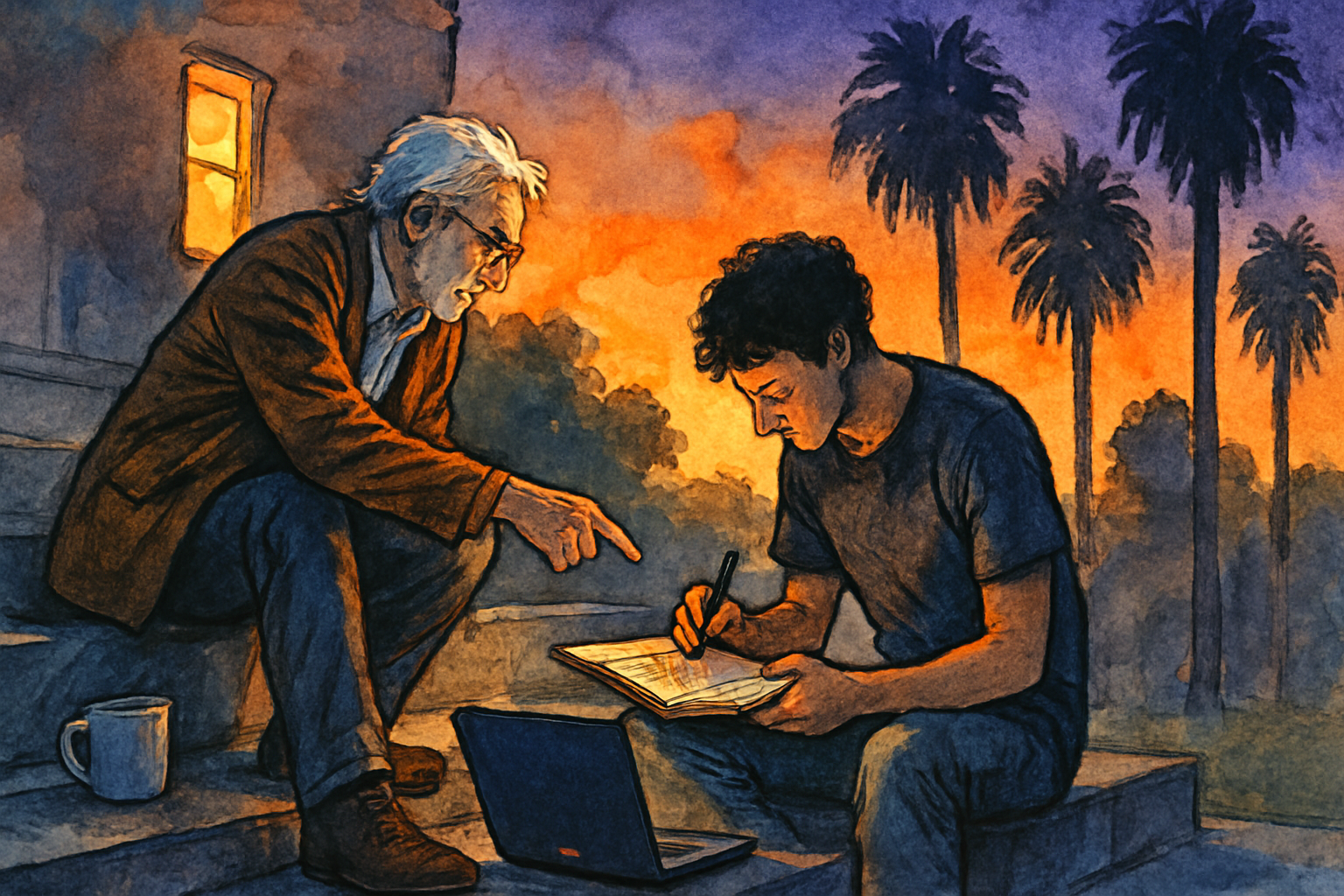
Fifth grade, maybe sixth grade, I was doodling in every margin of every page I owned. Mazes, patterns, whatever the pencil wanted to do, and teachers would look over my shoulder and say, “Greg, pay attention,” and I would look up and repeat exactly what they’d just said because I had heard every word while my hands were moving. But I couldn’t make them understand that the doodling wasn’t the distraction from the learning, the doodling was the gateway to the learning. If I didn’t doodle, my eyes would close. My focus would drift. The lesson would be gone by the time they stopped talking. With the pencil moving, with my hands doing something, my brain could actually receive what they were saying.
I tried their way. I sat on my hands. I put the pencil down. I concentrated on sitting still and paying attention in the way they meant it. And I lost everything. Completely lost it. When called out and asked to prove I’d been listening, I could do that easy, but the effort of proving it had cost me the lesson itself. The teachers had no vocabulary for what I was doing. They saw the pencil moving and they saw a kid who wasn’t sitting still, and they concluded distraction. I concluded something different, but nobody had asked me, and I had no way to tell them. So I kept getting told I wasn’t paying attention while I was actually absorbing everything, and I kept getting in trouble for the thing that made learning possible.
That pattern followed me. One point two grade point average when I got to Hargrave, Spanish notebook found on the roof of the school building in tenth grade, entire curriculum ten months overdue in 2026. The architecture of my brain is visual, spatial, kinetic. When I’m given problems that look like that, when I’m asked to see something and respond to it and move with it, I perform at a level that surprises people. But when I’m asked for compliance, when I’m asked to just sit down and do what I’m told and prove I understand it the way they want me to prove it, I go somewhere else. My brain clocks out. It’s not rebellion. It’s not laziness. It’s a fundamental mismatch between the way I process information and the way I’m being asked to demonstrate it.
Seek respect, not attention.
— Denzel Washington
Around ninth grade I got a camera. Not a good camera, just a camera, but it changed everything because now I had permission to look. I could spend ten minutes watching light refract through a raindrop, studying how the sun bent when it came through dew on a rose petal, looking at the way a shadow changed shape on a wall throughout the day. My eyes became camera lenses. And suddenly I wasn’t distracted anymore because I finally had a framework for the way my brain wanted to work. The distraction wasn’t in the looking, it was in being forced to stop looking, to sit still, to not pay attention to the thing I actually needed to pay attention to.
Not a good camera, just a camera, but it changed everything because now I had permission to look.
Greg Williams
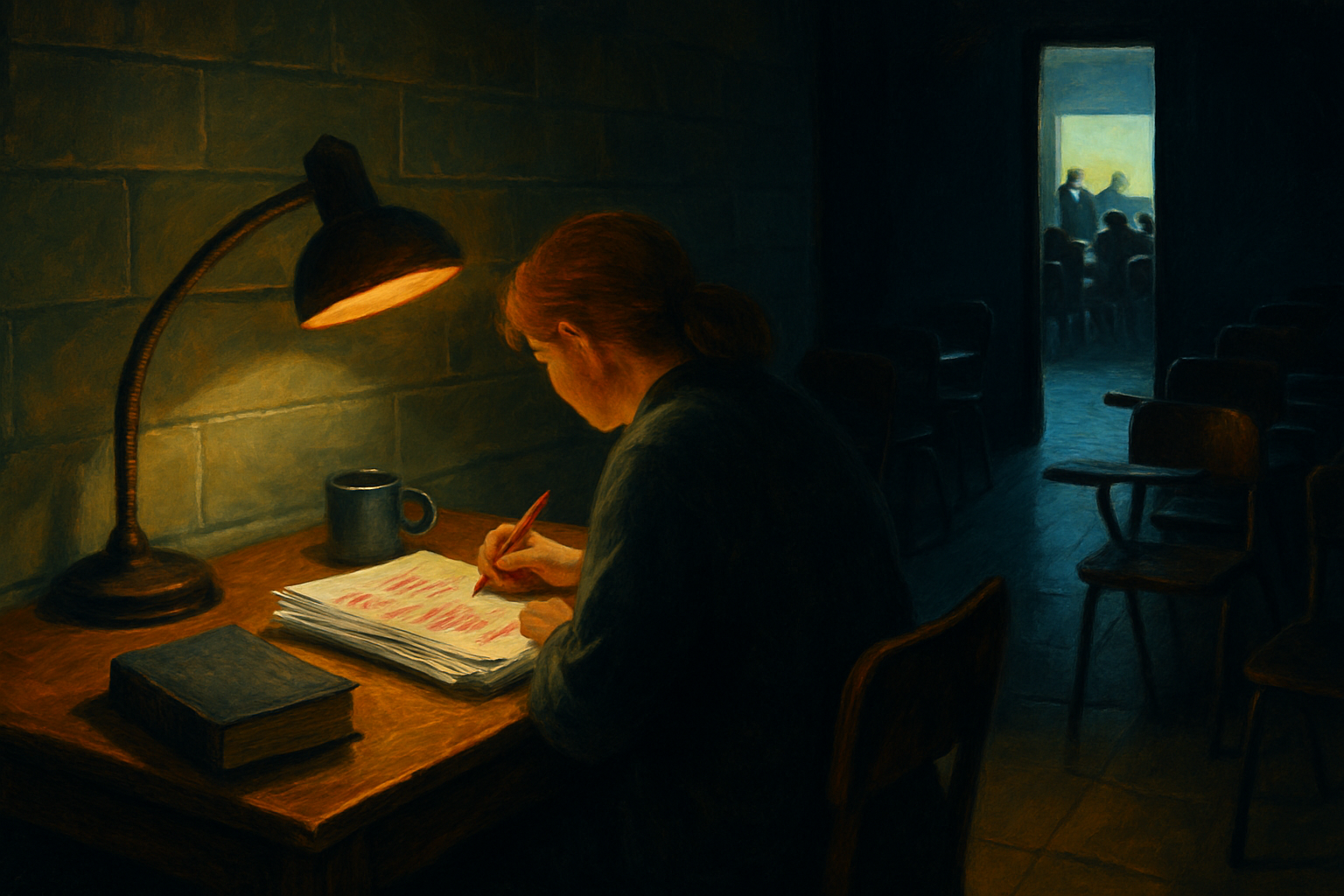
The teachers who didn’t understand this thought I had a broken brain. Some of them said it out loud. ADHD wasn’t on anyone’s radar in the way it is now, so they just figured I was lazy, or stupid, or didn’t care, or was choosing not to apply myself. But I was applying myself. I was applying everything I had. I was just applying it in a visual, spatial, kinetic way instead of a sitting-still-and-listening way, and the system had no room for that. So I got in trouble. I got underestimated. I got told I was wasting my potential, which is another way of saying you’re not doing it the way we want you to do it.
The cost of that is profound. I grew up thinking I was defective. I grew up thinking that if I just tried hard enough, if I just sat down and focused harder, I could learn the way they wanted me to learn. I couldn’t. It was never about effort. It was about the fundamental way my brain was wired, and nobody was willing to say that out loud, so I just internalized the message that I was the problem, and I moved through school like someone who didn’t belong.
The irony is that every time someone has finally said,
Greg Williams
The irony is that every time someone has finally said, “Okay, show me how you see this,” my work has been the best work in the room. Every time I’ve been allowed to attack a problem the way my brain works, the results have been remarkable. But how many times did that not happen? How many problems did I fail because I was refusing to solve them in the wrong way? How many skills did I not develop because I was told to stop doodling instead of being asked why doodling made me actually understand?
Your brain is not broken if it works differently than someone else’s brain. Your brain is not lazy if it needs to move while it thinks. Your brain is not defective if it learns visually instead of through lectures. The institutions that decided all brains should work the same way, they’re the ones with the problem. I spent forty years learning that, and I’m still learning it, and I’m still watching students get the same message I got, that their brains don’t work, when what’s actually true is that their brains work differently. So the doodling isn’t distraction. It’s how some of us actually pay attention. It’s how some of us think. And if you can give kids permission to think that way, if you can stop treating the moving pencil as proof of distraction and start treating it as evidence of engagement, you’ll be surprised by what they suddenly become able to do.
For Further Reading
Posts that connect to the themes explored here.
- More from Greg Williams — Additional posts on design, creativity, and teaching.