Your First Version Is a Filter, Not a Truth
The first version of anything is not the real version. It’s the version that tells you what you think you’re making before you actually make it. And the gap between the first version and the second version, that’s where you discover what you’re actually making. I’ve built this principle into almost everything I teach because it’s one of the few things I’m completely certain about after twenty-five years of being in front of a classroom, and it applies to exercises and to design work and to writing and probably to anything else you care to make well.
Here’s a concrete example. Section 36 of my Playing With Purpose exercise collection is titled something like “You Have One Option or You Have None” and the premise is pretty straightforward: if you generate one option for a solution, you have absolutely no way to evaluate whether it’s good, because you have no comparison. Is this the right shape, or is it just the shape you happened to make first? Is this the right color, or does it look right because you’ve been staring at it for ten minutes? Is this the right sequence of steps, or is it just the sequence your brain defaulted to? You can’t know anything about your first option except that it came from you. You can’t know anything about whether it’s actually solving the problem you’re trying to solve.
But if you generate ten options, suddenly you can evaluate. Not because all ten are good (they probably aren’t) but because you can see the patterns. You can see what’s different when you change the constraints. You can see which choices you made in all ten versions and which ones varied. The choices that appeared in all ten versions, those are the ones that are probably essential. The ones that were different, those are the ones where you have real flexibility. That distinction doesn’t exist when you have one option. It only exists when you have enough versions to start seeing patterns.
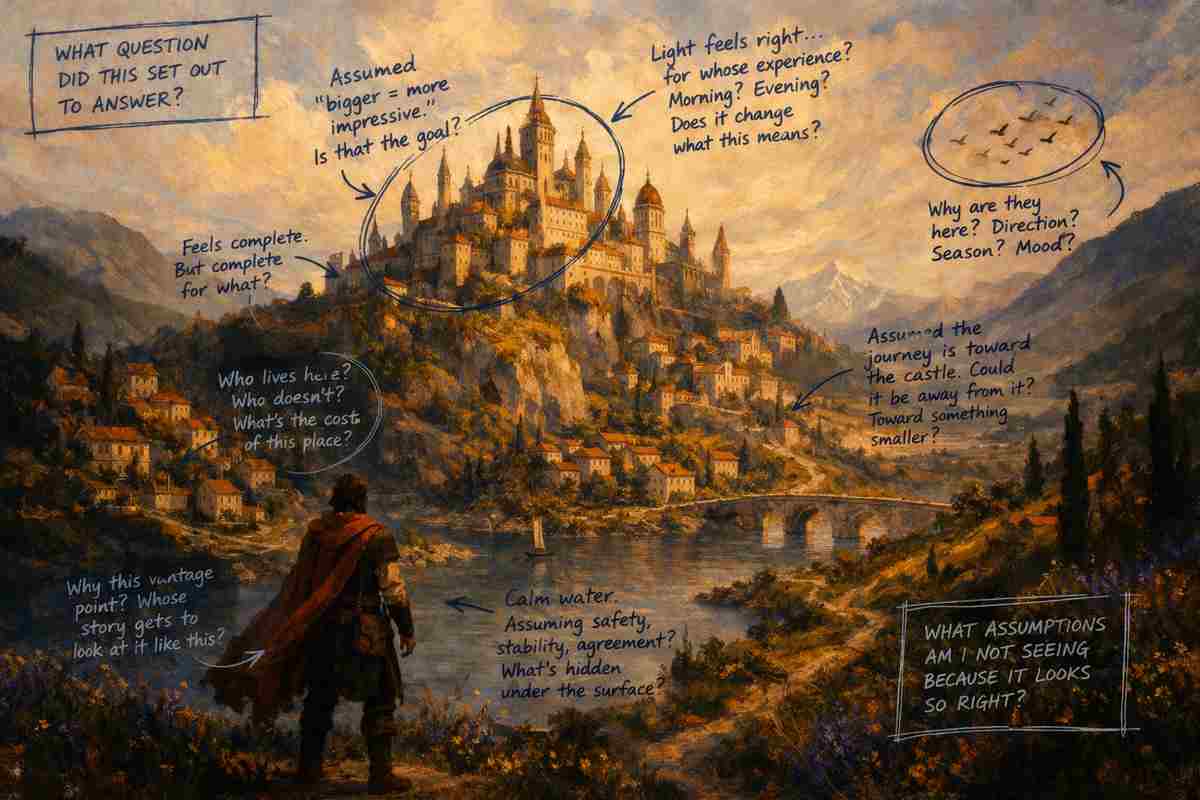
And what’s strange is that most people, when they hear this, they nod and they say okay, that makes sense, I’ll generate more options. But generating more options isn’t actually about quantity. It’s about breaking the assumption that your first instinct was right. Because your first instinct almost always looks right to you. It came from your brain. It’s familiar. It has the shape you were expecting it to have. So you have to force yourself to break it. You have to deliberately try a different approach and sit with it long enough that it starts to feel possible, even though it contradicts your first instinct.
The hard part is that often the first version works. It’s not broken. It doesn’t fail. It just doesn’t fail hard enough to force you to make it better. This is actually the worst-case scenario for learning, because success without understanding is just habit. You’ll do the same thing next time and it’ll work again, and you’ll never know whether you’re actually solving the problem or just lucky, or just doing what you did before.
I saw this constantly in my teaching. The students who struggled were often the ones who improved the most, because they had to figure out why their first version didn’t work and then try something different. But the students who were technically good, the ones who got the tools right and the proportions right and the color relationships right on the first try, they were often the ones with the most resistance to changing their process. They had built their identity around being the kind of person who gets it right the first time, and that identity was working well enough to keep them from noticing they weren’t growing anymore. They were executing better and better versions of the same idea.
My whole exercise collection went through this process. I wrote initial versions of all 650 exercises, and then I put them in front of a panel of educators and designers, and we went through them critically. Not to make them perfect, but to find the ones that weren’t actually teaching what I thought they were teaching. The ones where the parable was confusing, or the prompt was unclear, or the instruction was implying something the exercise wasn’t actually designed to do. And then I’d rewrite those, and we’d come back to them and find something else that needed to shift. The first version of section 100 is almost unrecognizable now compared to section 100 version three or four. Not because the first version was bad, but because the first version was showing me what I thought the problem was, and revisions were slowly revealing what the problem actually was.
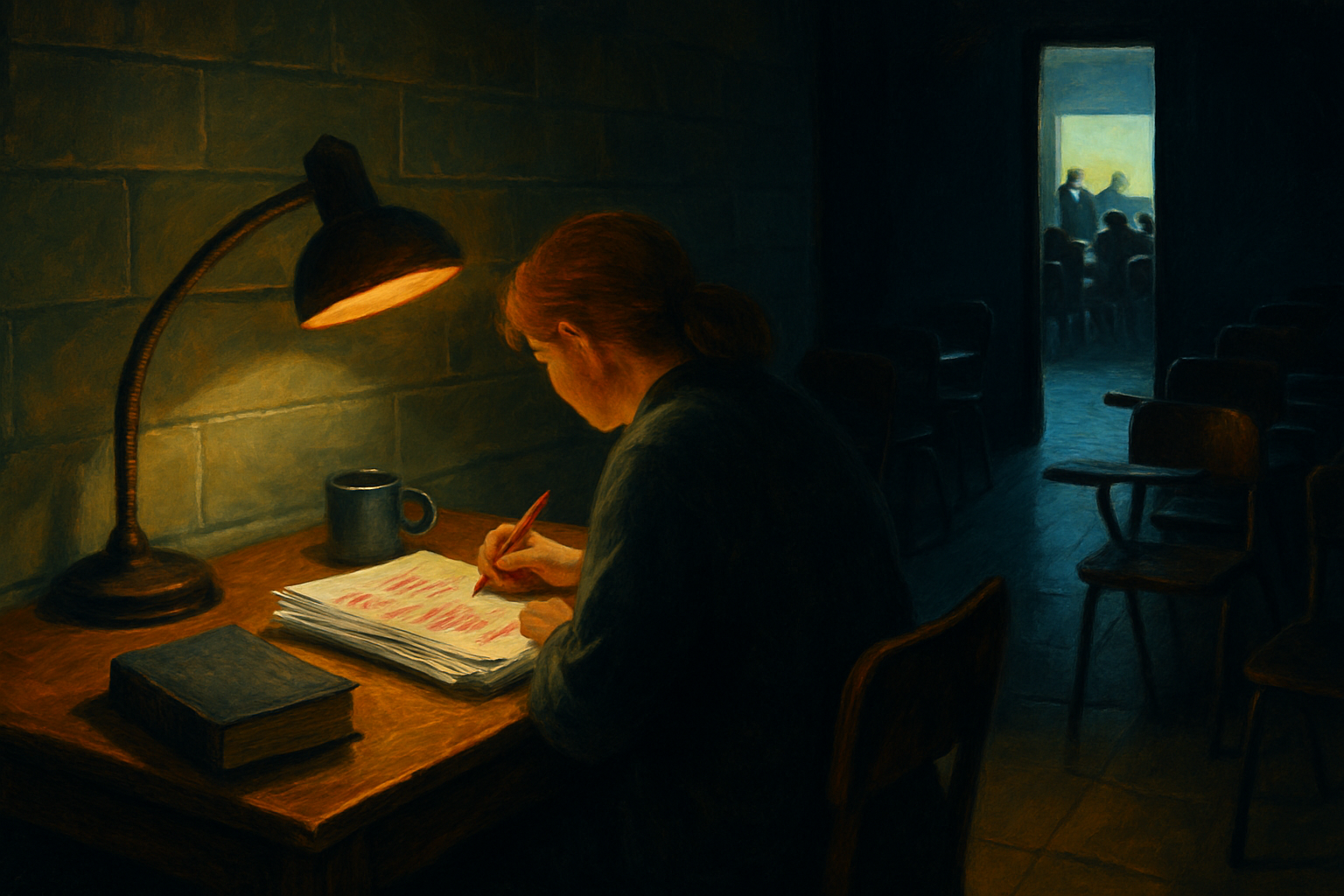
The critique process is where this lives. When you bring a first version to someone you trust and you ask them to really look at it, they’re not seeing the same thing you’re seeing. They’re seeing what’s actually there, not what you intended to put there. The gap between those two things is enormous. I remember bringing design work to critique when I was first teaching (I started teaching at 39 and a half, so I came to it from the outside, which means I was learning critique process at the same time I was trying to teach it), and I would describe what I was trying to do and the person would say, well, that’s not what’s happening in the work. And I would feel defensive, like they were wrong about what they were seeing, but really they were just describing the gap between my intention and my execution, and that gap is always the most valuable thing to pay attention to.
The second version is always better, not because you’re refining the first version, but because the second version is the one where you’re actually working from understanding instead of assumption. You know what the problem is because you’ve failed at it once. You know what your instinct was, and you know it’s not enough. So you have somewhere to push against. You have actual ground to stand on.
This applies to everything. My work right now on a personal project to help serve my students better, I’m on some features that are in iteration seven or eight. The first version told me what I thought people needed. The second version told me they needed something slightly different. By version five, I was working from actual information about the problem instead of guesses about it. Earlier versions weren’t wrong. They were just incomplete. They were good enough that I could learn from them, and learning from them meant making different choices in the next version.
The mistake is thinking that getting it right the first time is the goal. The actual goal is understanding deeply enough that your seventh version is genuinely different from your first, because you’ve learned something in between.
What’s something you’ve made multiple versions of where the second version was almost unrecognizable from the first?
Further Reading
- Good from Afar, But Far from Good: AI Prototyping (NN/g) — Why AI first outputs need iteration
- AI Design Tools Are Marginally Better (NN/g) — Critical evaluation of AI design output quality