Exercise 10 of 20 from the Playing With Purpose Student Edition
From Book 5: The Craft (Exercises in Mastery)
The Exercise
Take a layout you made or one you admire. Look at it and identify where it feels crowded. Where elements are jammed together. Where the eye cannot rest. Now identify where it feels spacious. Where there is silence. Now ask: Is the crowded space crowded by intention, or by accident. Is the spacious space generous because it is necessary, or is it wasted. Finally, identify one place where the design could use more silence to improve clarity. Add that space. Rebalance other elements if needed. You are not subtracting. You are redistributing silence.
Reflection Questions
1. Look at your own work now. Where is it crowded. Where do you need more breathing room. The answer is usually obvious once you learn to see it. Crowded layouts feel desperate. Spacious layouts feel confident. The confidence comes from the silence, not from what is there.
What We Were Trying to Do
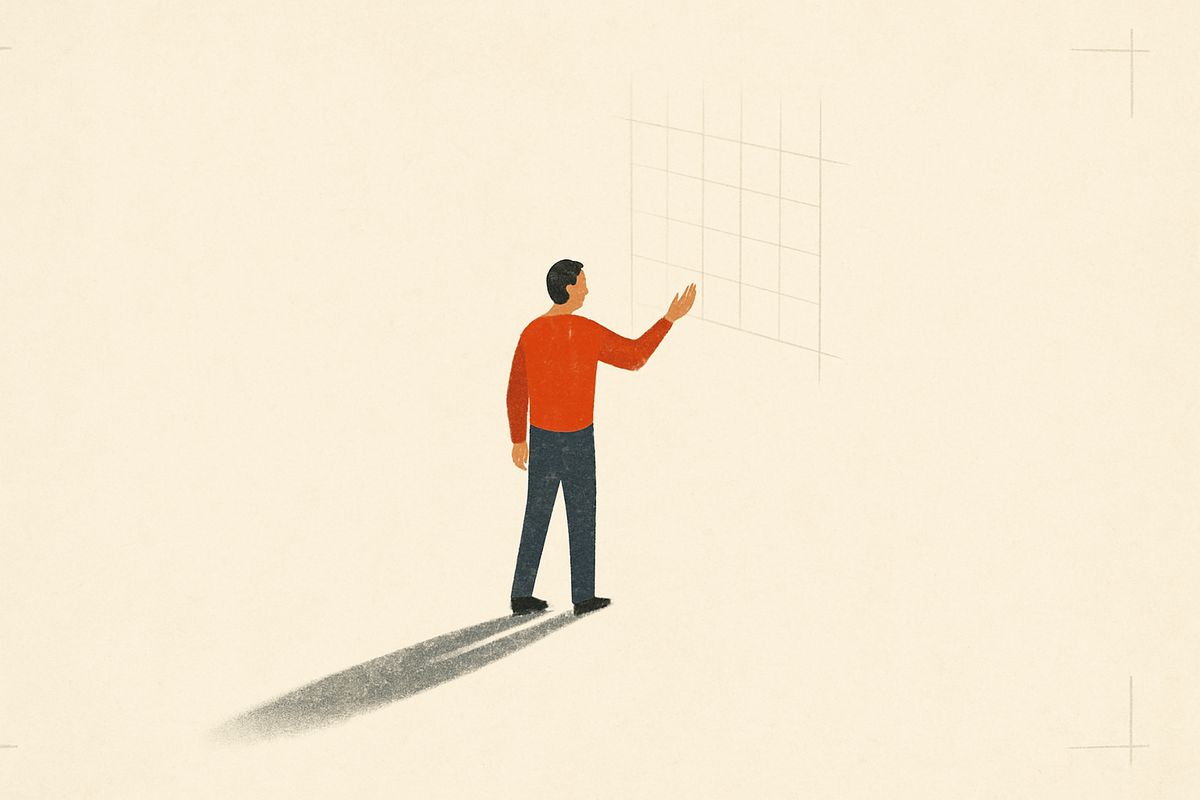
White space is unused space. It is the opposite. White space is the most active material in design. It separates. It emphasizes. It gives permission to pause.
Why It Matters
Breathing room is not decoration. It is a requirement for clarity. Information that lives in crowded space competes for attention. Information that breathes commands attention.
References & Further Reading
Massimo Vignelli believed in ‘intelligent emptiness.’ His designs used vast amounts of white space not from minimalism, but from clarity. Every element he included had to justify its presence. Everything else stayed silent. Antoine de Saint-Exupery wrote, ‘perfection is achieved not when there is nothing more to add, but when there is nothing left to take away.’ This applies to space as much as to elements.
Going Further
The layout breathes. No section feels suffocated. The eye has places to rest between moments of engagement. When you read the work, you feel pace rather than panic.
This exercise is from the Playing With Purpose Student Edition by Greg Williams. The complete series of 650 exercises across 10 books is planned for publication in summer 2026.
This is practice. Nobody will grade this.