About This Post: Somewhere around my late forties, I realized I had spent a decade taking pretty pictures of flowers and butterflies and calling myself a photographer. I wanted more than that. What I built instead, and what it gave me and about a thousand other people, taught me more about creativity, community, and learning than almost anything else in my career.
— Greg Williams, design instructor
I was approaching fifty years old, and I was still not a professional photographer.
That’s an uncomfortable sentence to write, and it was a more uncomfortable realization to have, because I had every excuse in the world not to feel that way. I had been teaching and editing with Photoshop for over a decade at that point. I knew the software. I understood light, composition, the technical architecture of an image. I’d been reading Scott Kelby’s Photoshop User Magazine religiously. I could make a flower look like a painting. I could make a butterfly look like a stained glass window. And I was deeply, quietly dissatisfied with every single one of those photographs.
The problem wasn’t the flowers. The problem was that I kept shooting flowers because I could. Because they held still. Because the light in the backyard at seven in the morning was genuinely beautiful and I could control everything about the frame and come away with something I was proud of without any real risk. And you know, there is nothing wrong with that, except that I wanted to be something more than a hobbyist with a clean portfolio of safe subjects, and the books and the videos and the magazine subscriptions weren’t getting me there on their own. Something else was missing.
So I started looking for a photography group. That seems like a straightforward solution, and it would have been, except that the groups I found were in Orlando and Tampa, far enough from Lakeland that a monthly meetup becomes a genuine commitment, and several of them had a model I didn’t like: pay your membership fee first, and then you’ll find out what you’re getting. I just wasn’t sure what I was walking into or whether it was worth the money. So I didn’t join those groups. I started my own.
Kerri, my co-instructor, who sat at the desk right next to mine for fifteen years, heard the idea and said yeah, sounds good, let’s do it. I think she made it to one shoot. That’s about how involved Kerri was, and I say that with full affection, because her saying yes was enough to get me moving, and moving was what mattered.
We called it the Lakeland Shooters, and it grew into the Lakeland Shooters, Polk County Photography and Modeling, because it turned out that what we were actually building was bigger than a club for people who owned cameras. Models came. Makeup artists came. Cosplay people turned out to be extraordinary to work with for themed shoots. Some of the earliest people in the room were Marty Newkirk, Ken Bundy, Hanif Abdul, and Anthony Sassano, and those names matter because this story is about people, not about a group, and those were the specific people who showed up when showing up meant something.
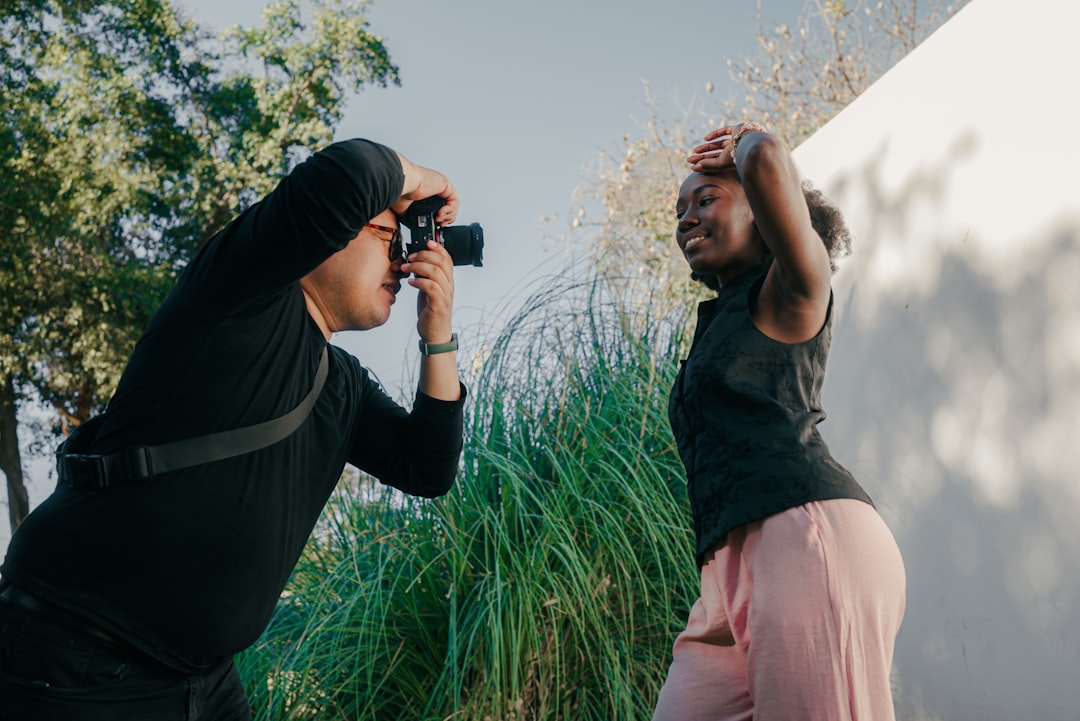
We did monthly shoots. We did First Fridays. We showed up at local events and photographed them. We tried to pair more experienced photographers with less experienced ones, Canon shooters with Canon shooters and Nikon shooters with Nikon shooters so we could compare notes on gear and technique. One time somebody had the idea to do zombies. So we went out to an empty section of a park with twenty fully costumed, fully made-up zombies, a dozen photographers, smoke machines, and whatever lighting rigs people could haul out there, and the police came by to see what on earth was happening. We were doing zombies. Fairy tales were another shoot, and somebody actually dragged a full poster bed out to the location for that one. We did cosplay superheroes in downtown Lakeland. We opened a bar early one morning for an indoor shoot, and a group of bikers showed up while we were there, and the next thing we knew the models were posing on motorcycles and the bikers were absolutely loving every minute of it. Every shoot was somebody’s idea, and the plan was that whoever pitched the idea would organize it. That was a beautiful theory, and in practice it meant Marty ran basically every shoot for the first eighteen months, which was a lot to put on one person who had her own photography career to build and could have been out shooting instead of managing. Thank you, Marty.
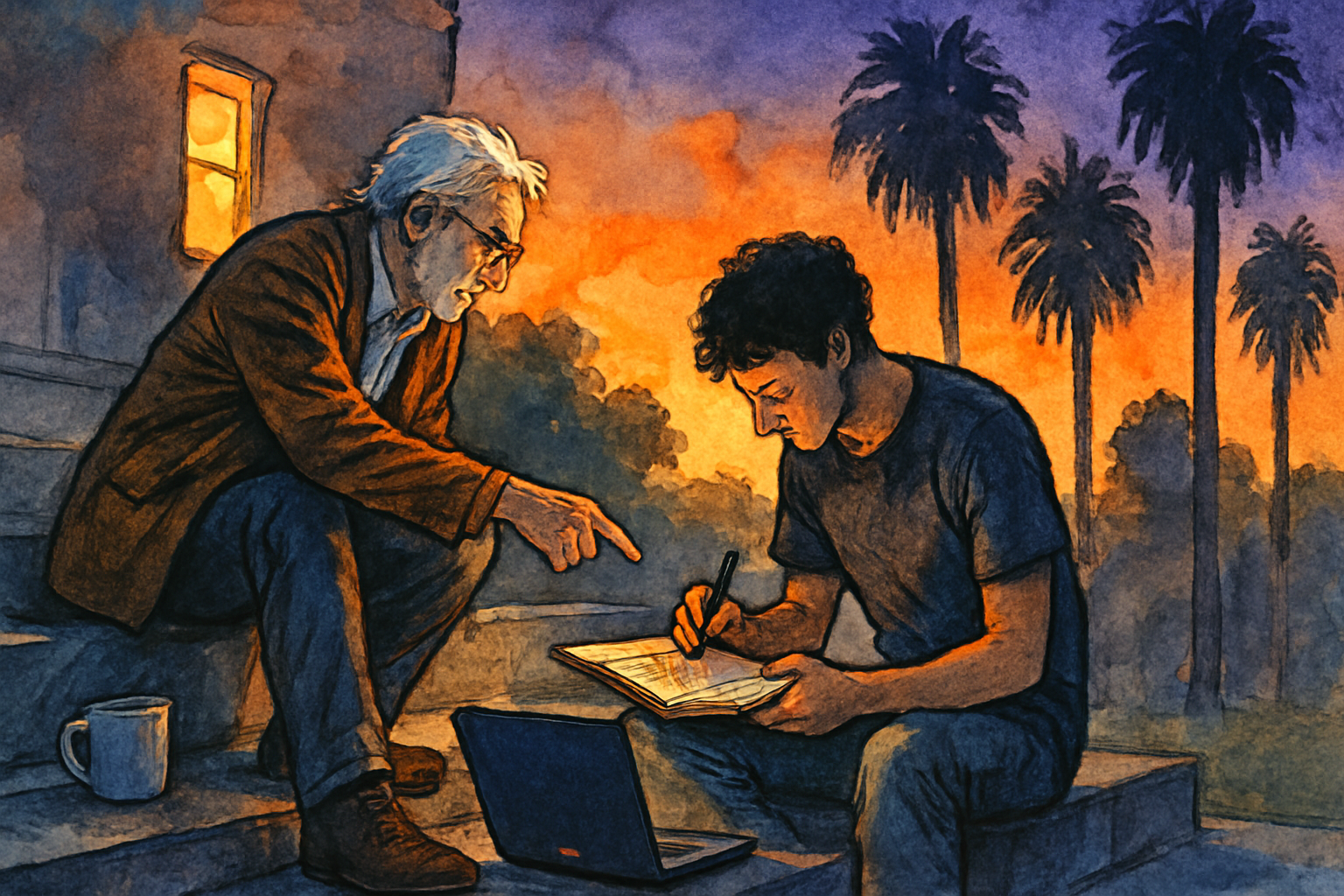
My purpose from the beginning was straightforward, and I’ll tell you exactly what it was because it’s the same principle I’ve used in almost every learning context since: if you want to be serious about something, you need to spend time with people who are more serious and more successful than you are. Not to intimidate yourself. Not to compare. But because seriousness is contagious, and skill transfers in ways that no tutorial can replicate, and the questions that come up when you’re standing next to someone who knows more than you do are better questions than the ones you’d come up with alone at your computer. The Lakeland Shooters was engineered around that idea, even if I never described it that way at the time.
Here is what that actually felt like from the inside. You go to EPCOT with your children, and they are tolerant of you and your camera, patient up to a point, but they don’t really understand why you need twenty minutes staring at a crack in the wall to figure out how to shoot it. You go to EPCOT with three or four other photographers, no kids, no spouses, and you can spend those twenty minutes on that crack in the wall and nobody gets impatient, because everyone else is looking at it too. They see it. They see something else you didn’t notice. You all understand what you’re doing there, and it has nothing to do with recording that you were there. It’s about asking how to present this ordinary thing in a way that makes people see it differently. I loved those trips. I miss them.
I was intimidated at first, I’ll admit that. People started pulling out serious glass at these shoots, serious lighting, decades of experience that showed in the way they moved around a subject and set up a frame, and here I was, the guy who could edit an image but wasn’t entirely sure he knew what he was doing on the other side of the camera. And then one afternoon I overheard Marty telling someone, and I don’t think she knew I could hear her: “If you want to really understand composition, go look at everything Greg posts. He’s not the best photographer, but when it comes to really understanding composition, you should just study what he posts.” I’m a mathematical designer. I see in proportions, in geometry, in the relationships between elements in a frame. Turns out that was worth something to people who were better behind the lens than I was. That was a good afternoon.
At one point, we had around a thousand registered members between Meetup and Facebook. The page is still up today, sitting at 1,288 members and counting, still running events, still going out on shoots. Hanif, one of those earliest members, is still one of the organizers. That’s the part I find most remarkable, not the numbers, but that something started by a bunch of people who wanted to be better photographers outlasted its founders and is still doing the work.
And here is the part of the story I love best, because it sounds like failure and is actually the opposite: the club wound down from its peak because too many of us got too good. We started getting hired. Events, weddings, full-time commercial work. Melissa got us into the Sun and Fun air show with press passes. The Alliance for Independence started giving me a VIP pass because I’d photographed their wine festival for two years running and they called me on the third year when I was sick to ask where I was. The thing we had been practicing for started actually happening, and when it happened there was less free time to spend a Saturday morning at a meetup shooting portraits in a park. We didn’t slow down because the group fell apart. We slowed down because the group worked. I’ve thought about that a lot over the years, what it means to measure success by whether people need you less, and I think it’s the right measure for almost everything worth building.
I brought a lot of what I learned into the classroom. Not the technical parts, though those came along too, but the understanding of what it actually takes to get better at something creative: you have to be willing to look at your own work honestly, you have to be willing to show it to people who will tell you the truth, and you have to be in the room with people who are ahead of you often enough that you start to internalize what that looks like. The Lakeland Shooters was a room I built because the right room didn’t exist.
I haven’t allowed myself to just go out and shoot for the sake of shooting in way too long. There is always something to do, someone to take care of, something asking for my time, and I’m not begrudging any of it, but I miss those days of being out for three or four or five hours with models and photographers and smoke machines, watching somebody pull a creative idea out of thin air and all of us just running with it. Those friendships. I really need to call some of those people.
It turns out I’d spend the rest of my career building rooms. But this was the first one, and it was a good one.