Exercise 14 of 20 from the Playing With Purpose Student Edition
From Book 7: The Room (Exercises in Collaboration)
The Parable
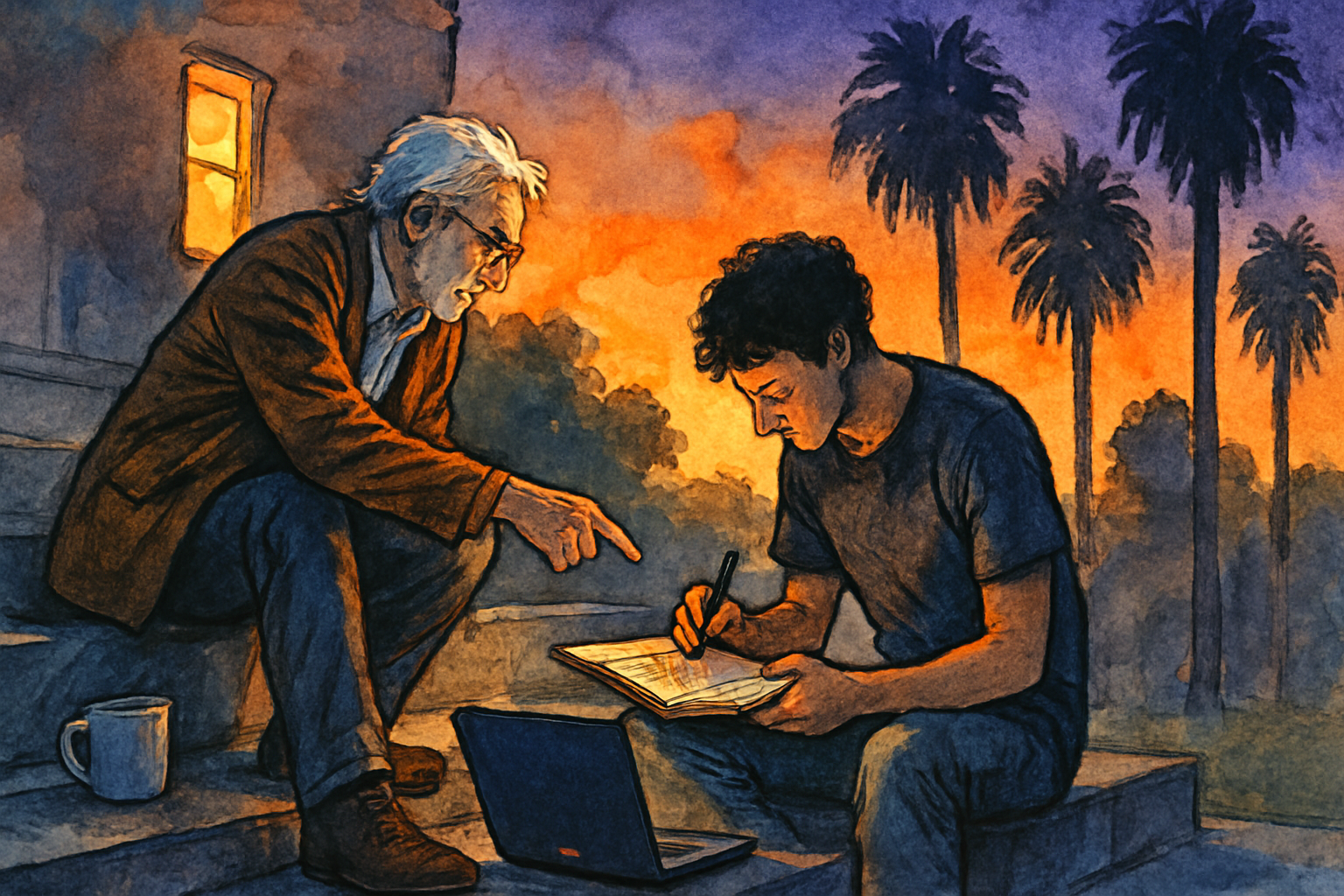
Two potters sit at their wheels. One throws a pot while the other watches. The watching potter says nothing. The throwing potter makes something safe and familiar. Later they switch. Now the first potter watches and says nothing. But she made something wild and new. The first potter asks, ‘Why did you make something so different?’ The second potter says, ‘I could not see your face. I did not know if you approved. So I made what I actually wanted to make.’
You think critique makes better ideas. Often it just makes safer ideas. Try making ideas when no one is watching.
The Exercise
Step 1: Define one creative problem clearly. Write it down so everyone sees it the same way.
Step 2: Give everyone paper and a pen. Explain they have five minutes alone.
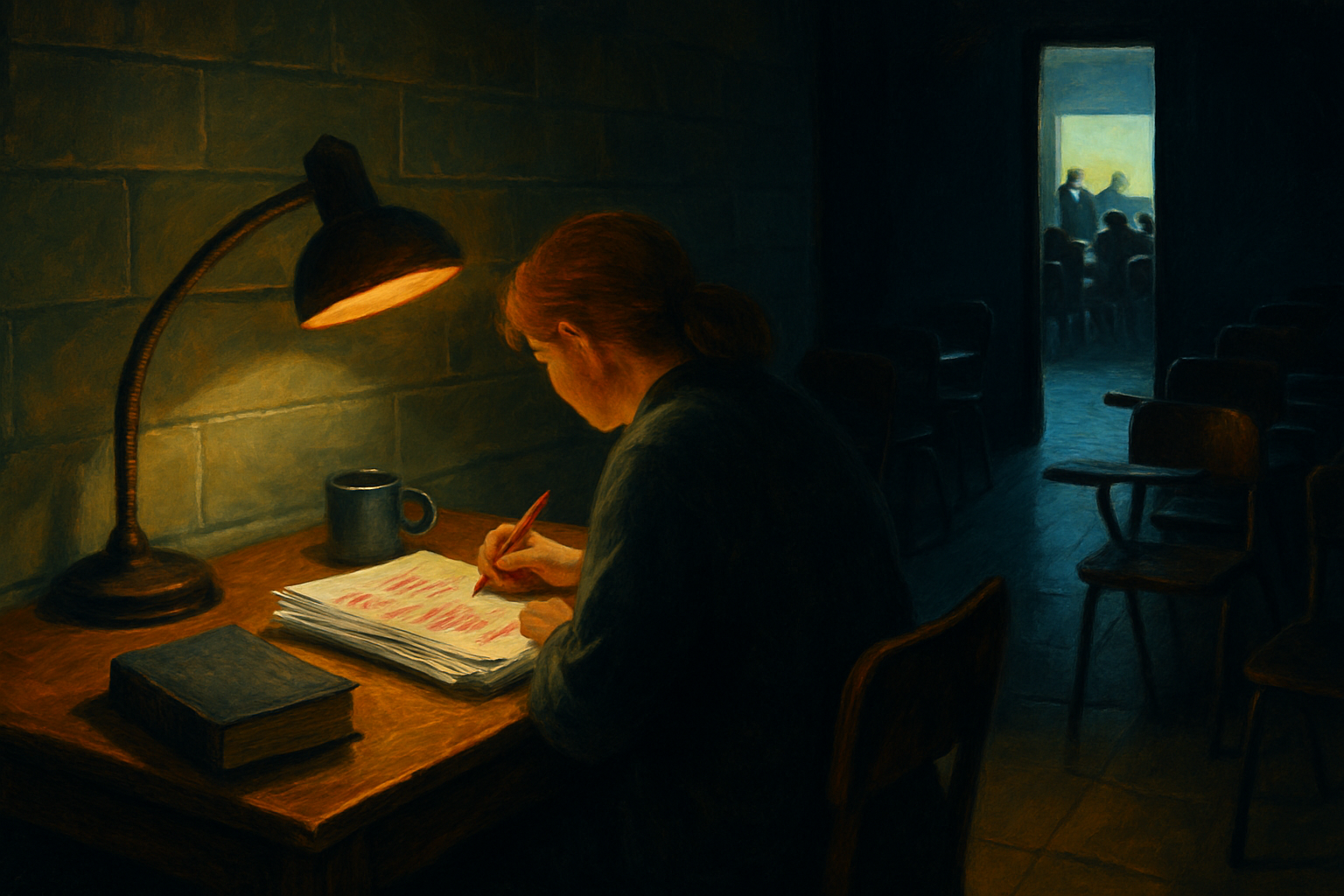
Step 3: Each person generates solutions completely independently. They do not discuss. They do not show their work. They do not defend ideas.
Step 4: When time is up, have each person share their solution. All at once if possible. Do not go one person at a time.
Step 5: Write down every solution. Do not comment on any of them yet.
Step 6: Now discuss. What surprised you? Which ideas could you combine? Which one opens a door you did not know existed?
Step 7: Judge nothing during discussion. Only ask ‘What would this idea become if we took it seriously for one hour?’
Step 8: Notice how different your ideas are when no one was watching you generate them.
Reflection Questions
1. You probably made something safer when you were alone than you would have made in a group. That safe idea is not your best idea. It is your most defended idea.
2. When ideas are presented at the same time, you cannot kill one before it lives. All ideas get to exist for a moment.
What We Were Trying to Do
You think the problem is that people are not creative. The problem is that people are too aware of the room while they are creating. Awareness kills generation.
The best idea in the room usually came out last when no one had time to defend it or explain why it would not work.
Why It Matters
Linda Hill studied innovation at Apple, Google, and Pixar. She found that the highest-performing teams separate idea generation from idea evaluation. When you evaluate while generating, you make fewer and safer ideas. This exercise teaches that separation.
Your creativity is not broken. It is just scared of the room.
References & Further Reading
Hill, Linda. ‘Collective Genius: The Art and Practice of Leading Innovation.’ Harvard Business Review Press. 2014. Chapter ‘Creative Abrasion.’
Going Further
Variation: Have people share solutions without saying whose idea it was. Judge the ideas, not the person.
Advanced: Do this exercise three times on the same problem. Ideas become braver each round.
This exercise is from the Playing With Purpose Student Edition by Greg Williams. The complete series of 650 exercises across 10 books is planned for publication in summer 2026.
This is practice. Nobody will grade this.