Exercise 17 of 20 from the Playing With Purpose Student Edition
From Book 9: The Teach (Exercises in Teaching)
The Parable
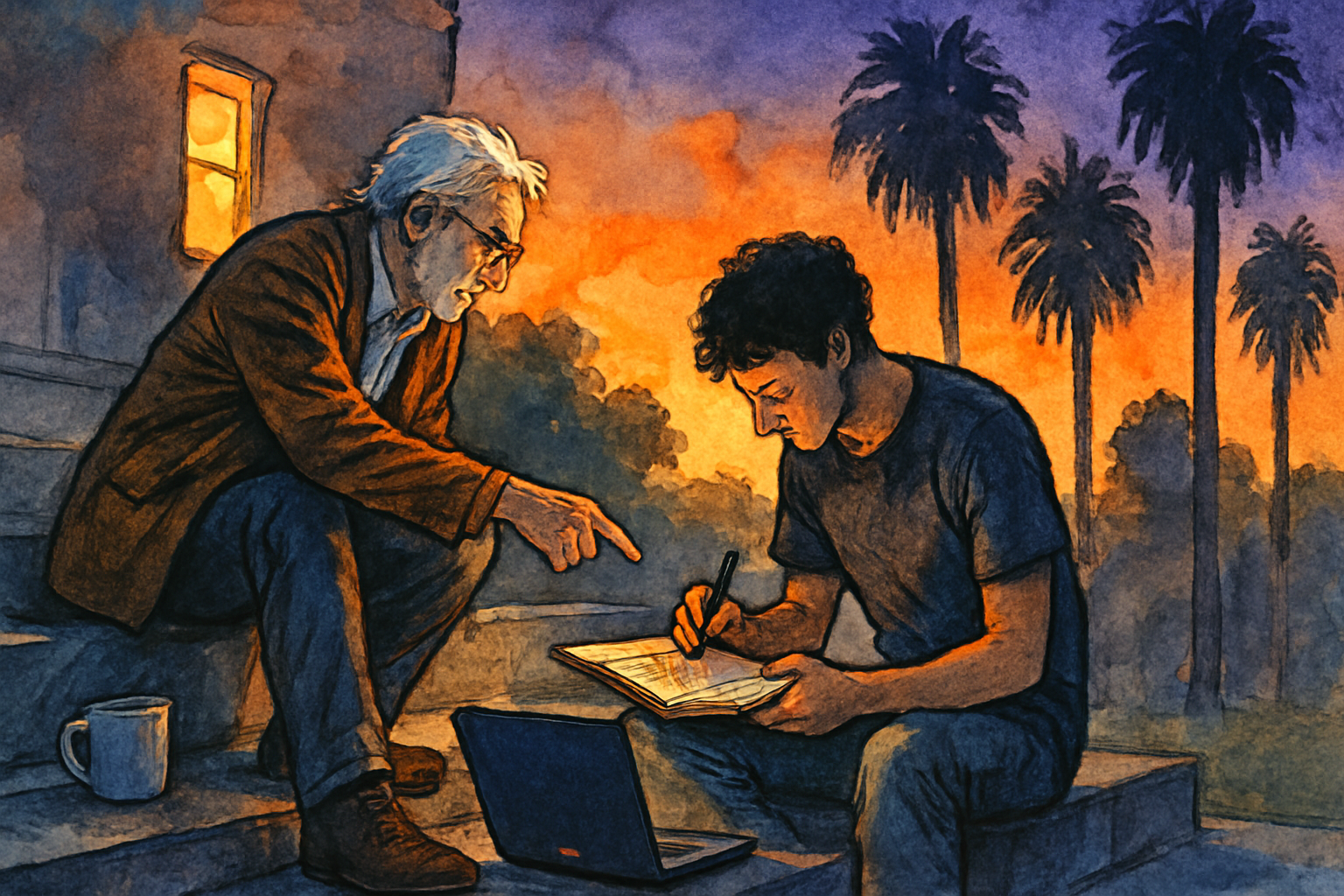
Before there were instruction manuals, people learned through stories. A young potter watched an older potter work. The older potter never explained technique. She just told stories while her hands shaped clay. One story was about a vase that held too much. The vase was beautiful, but it cracked in the kiln because its walls were paper thin. The story taught precision. Another story was about a vessel that took three weeks to build because every step needed to cure properly. The story taught patience. The young potter’s hands learned what the stories were teaching.
Stories compress wisdom into shapes people remember. They don’t lecture. They show transformation. A character faces something. Something changes. A truth emerges. That truth stays with you longer than any explanation ever could.
When you teach through story, people learn the principle by watching it come alive in a character’s journey.
The Exercise
Name one specific creative principle you want to teach. Keep it focused. Not creativity in general. One clear idea.
Invent a character. Give them a problem related to this principle.
Write one paragraph showing: what the character believed first, what they did based on that belief, what went wrong, what they discovered, what they do differently now.
End with a one-sentence moral that names the principle clearly.
Write it in story language, not explanation language. Show, don’t tell the principle.
Read it aloud. If it sounds like instruction instead of story, rewrite it.
Share it with someone. Watch whether they remember the principle or just remember the story. Ideally both.
Reflection Questions
1. Did the character’s transformation feel true? Where might someone doubt it?
2. What did the story teach that a direct explanation wouldn’t have?
3. Could you tell this story the same way to a ten-year-old and a seventy-year-old? Would both understand the principle?
What We Were Trying to Do
Many teachers think parables are decorative. Nice additions to a lesson, but the real instruction happens in the explanation. This misconception underestimates the power of story. Stories aren’t decoration. They’re information delivery systems that stick in memory because they move emotionally.
A fable teaches a principle through transformation. The character changes. That change embeds the principle in narrative form. When you teach through story, people don’t just learn the principle. They learn it through an experience that feels almost like their own experience. That’s why fables last.
Why It Matters
You can explain a creative principle in three sentences. People will forget it in three days. But tell them a story about someone learning that principle, and they’ll remember it for years. They’ll tell it to someone else. The story becomes part of how your creative community shares its values.
Writing a teaching fable teaches you something too. It forces you to distill your principle to its essence. You can’t hide behind explanation. You have to live the principle through a character and trust the story to teach what needs teaching.
References & Further Reading
Gottschall, Jonathan. The Storytelling Animal. Houghton Mifflin Harcourt. 2012. Chapter 1.
Aesop. The Fables of Aesop. Various editions. Any fable provides structure.
Williams, Greg. Playing With Purpose: Book Two. Collectively. 2022. Pages 34-45.
Going Further
The best teaching fables are exactly one paragraph. That length forces you to choose every word. If you need more, you’re overexplaining the story.
Fables work best when the consequence in the story is direct and clear. The character does something specific. Something specific happens as a result. That cause and effect is what makes the principle stick.
This exercise is from the Playing With Purpose Student Edition by Greg Williams. The complete series of 650 exercises across 10 books is planned for publication in summer 2026.
This is practice. Nobody will grade this.