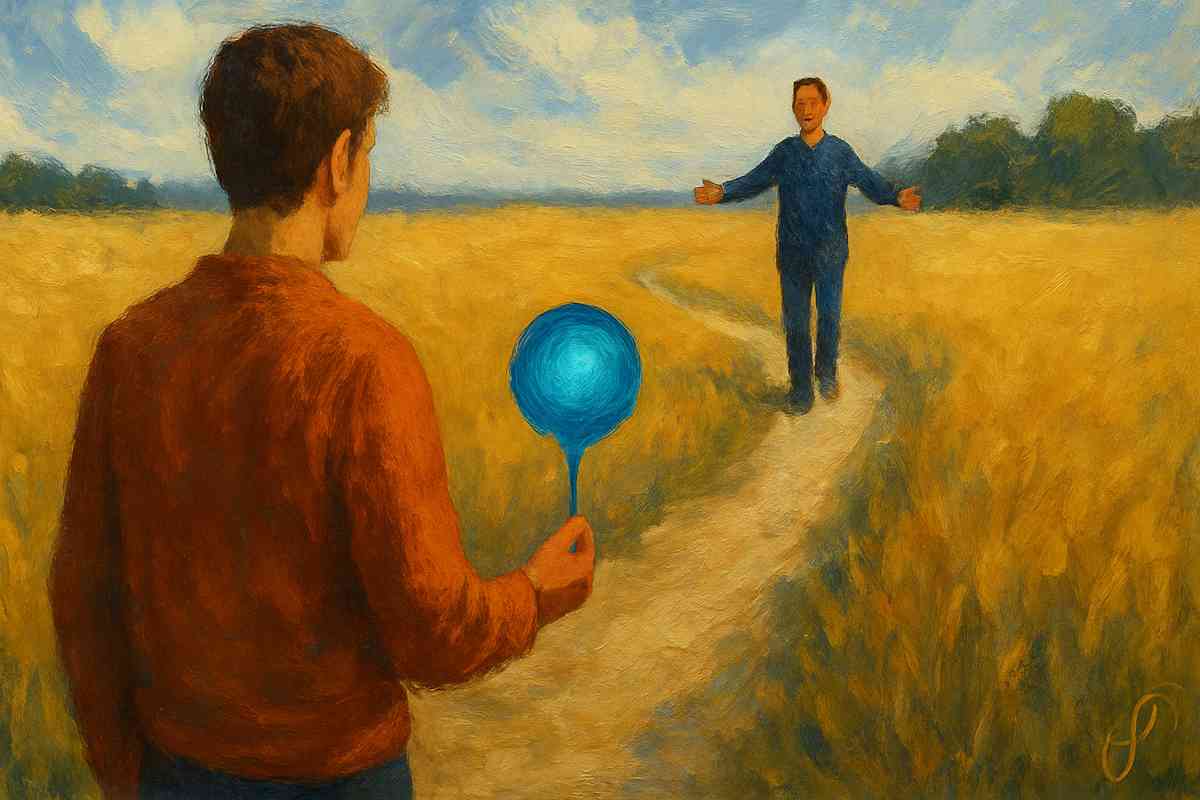
It usually starts about twenty minutes in, when the body has settled into that steady rhythm and the room disappears a little, and the hum of the treadmill becomes less like a machine and more like a metronome keeping time for something you can’t quite name, and I’m staring at that spot just above the horizon line in my mind, that place I’ve been working with since I was a teenager reading an article in a magazine I probably wasn’t ready to understand, and the light shows up again, small at first, just a dot, and I stay with it.
You know the difference between thinking about something and being inside it, and this is the second one.
And so I stay there, breathing, walking, letting the miles stack up without really counting them, and the light gets larger, not brighter exactly but more available, like a doorway that isn’t trying to impress you, it’s just there if you’re willing to keep your attention steady long enough to notice, and somewhere in that space the conversation starts, not out loud, not in words at first, but in that way you recognize before you articulate.
And it’s always the same cast of characters. The kid who did dumb things because he didn’t know better and sometimes because he did know better and did them anyway. The teenager who thought he understood the world and didn’t understand anything. The man who stood on a soapbox and built something bigger than he could hold, and then watched it fall apart in ways he still doesn’t fully explain to himself. They all show up.
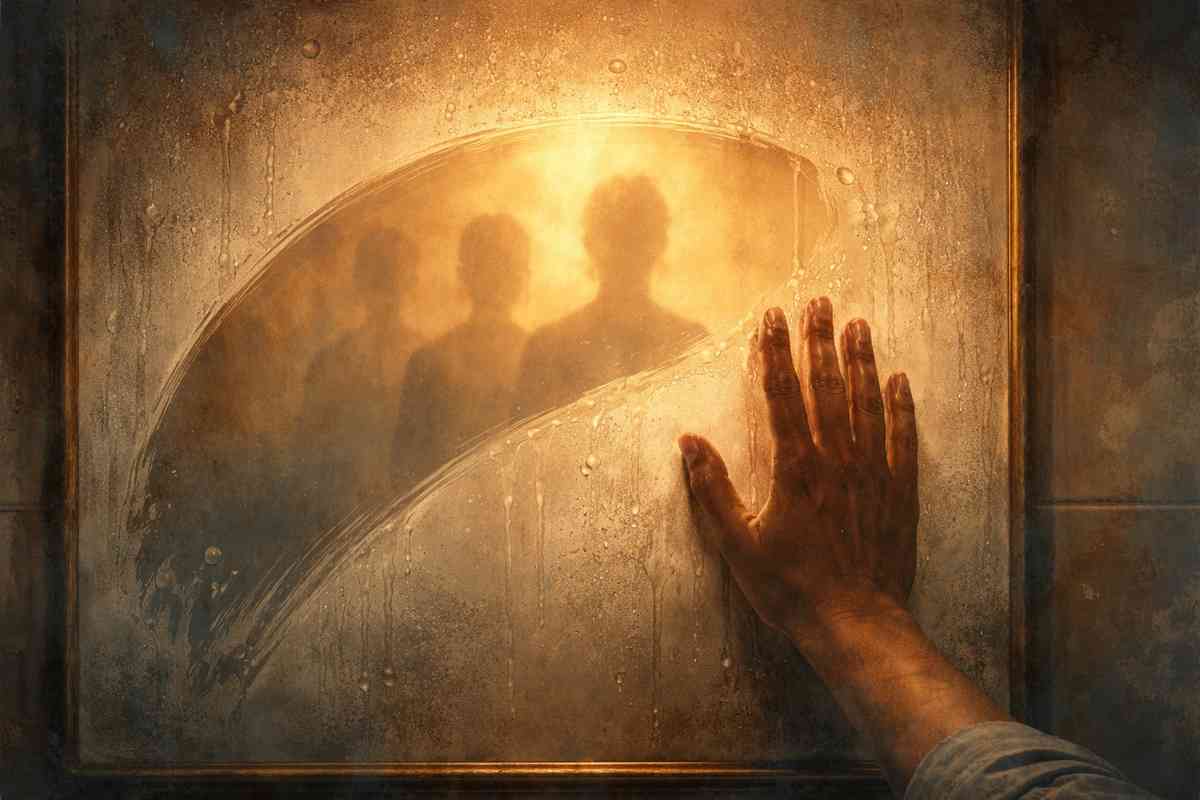
And for a long time, I tried to edit that lineup, you know, tried to keep the better versions in the frame and crop out the ones that didn’t photograph well, because it’s easier to tell a clean story about your life than it is to tell a true one, but the mirror doesn’t cooperate with that kind of editing. It just shows you what’s there.
I learned that the hard way at thirty-eight, which is about the age when you think you’ve figured enough out that the next part is just execution, and so I built an international business, and it grew, and it looked like success from the outside, and then it collapsed, not dramatically, not with some cinematic moment you could point to, but on its own, like a structure that was never as stable as it appeared and finally decided to tell the truth about that.
And in the same three months, C. filed for divorce, and I lost my house, and I lost access to my kids, and I lost whatever story I had been telling myself about who I was, all of it just gone in a season that didn’t ask my permission. You know how fast that can happen.
And I ended up in the back of my parents’ house, which is not where you picture yourself at that age, and I cried, and I curled up, and I didn’t want to do anything, and for a while I didn’t, because sometimes the only honest response is to stop pretending you’re okay.
There was a hurricane that year, and I went down to the beach and sat there and watched it come in, and I remember thinking, if it takes me, it takes me, and that wasn’t drama, that was just where my head was at the time, and I stayed longer than I should have, and then I left because I had this one clear thought, the kids will be upset. Not about me. About the idea of me. And that was enough to get me in the car.
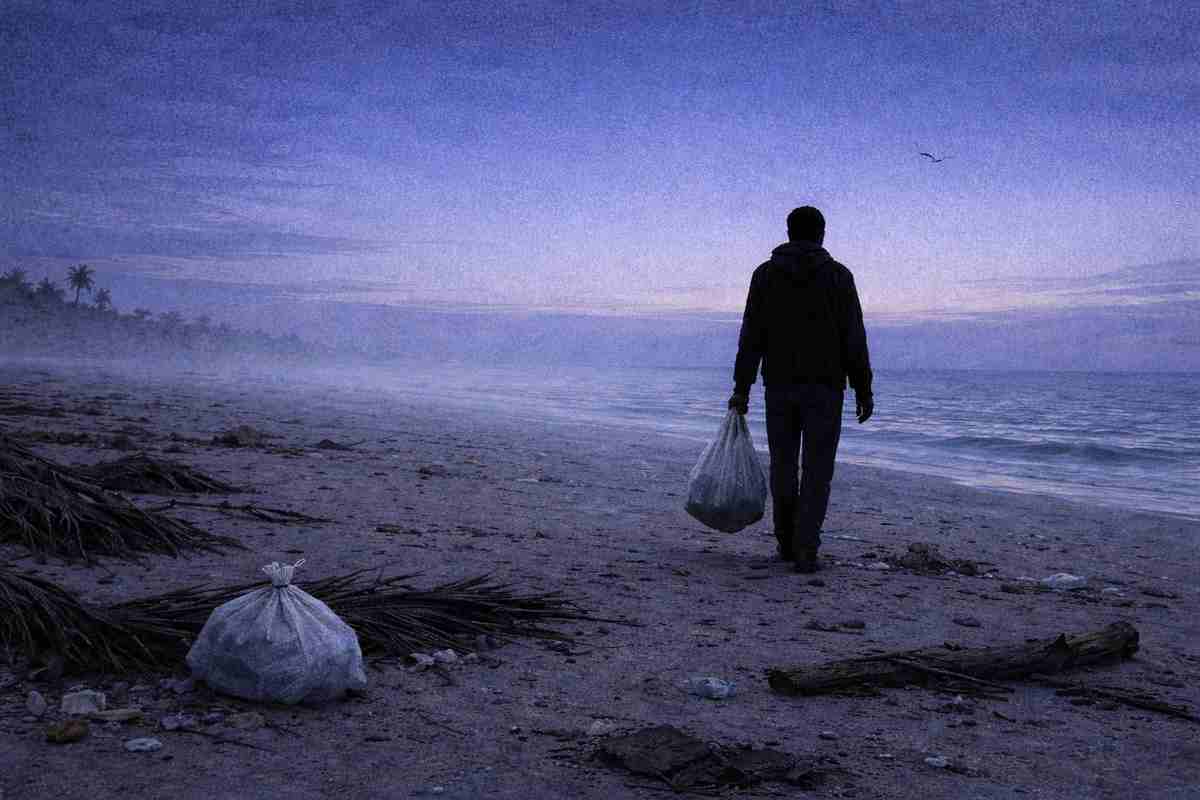
The rebuild didn’t start with a plan, it started with a trash bag. I would go to the beach every day and pick up garbage, one bag at a time, and I remember saying to myself, I’m not much good for anything, but I can bend over and pick up a piece of paper, and there’s a humility in that that doesn’t feel like a lesson when you’re in it, it just feels like survival.
But here’s the part I didn’t understand then, and maybe couldn’t have, that guy on the beach with the trash bag, the one who had lost everything and didn’t recognize himself anymore, he’s one of the people who shows up in that light now. And I didn’t like him for a long time. I judged him for what he lost, for what he didn’t see coming, for the decisions that led up to that moment, and I held him at a distance because if I let him too close then I had to admit he was me, and that’s not a comfortable admission when you’re trying to rebuild something that looks respectable.
But you can only keep that separation going for so long before it starts costing you more than it’s protecting you.
And so now, on that treadmill, somewhere between mile three and mile six, with sweat running down my back and the room gone quiet in that particular way it does when your body is working and your mind is finally willing to listen, I go find him. And I say it the same way every time. It happened. I acknowledge what I did. I learned from what I did. I truly am sorry. But I love you anyway.
And you might hear that and think it sounds soft, or indulgent, or like some kind of excuse, and I get that, because that’s what I would have thought at twenty-five, and probably at thirty-five, because we confuse punishment with accountability, and we think if we let ourselves off the hook emotionally then we’re letting ourselves off the hook morally, and those are not the same thing. Not even close.
Because here’s the thing, you know, staying angry at yourself doesn’t fix anything, it just freezes you in the moment you’re angry about, and you can call that discipline if you want, but it’s not, it’s avoidance dressed up as virtue. And so the work becomes something else entirely. It becomes looking at each version of yourself without flinching, which is harder than it sounds, because you know exactly where the weak spots are, and you know exactly which decisions you wish you could undo, and there’s no one to blame, no one to negotiate with, no one to convince that you meant well. It’s just you. And the mirror.
And so you look at the kid, and you look at the teenager, and you look at the man who thought he had it figured out, and the man who lost it all, and the man who is still trying to make sense of what any of it means, and you start to see something you missed when you were busy judging them. They were doing the best they knew how. Not the best possible. Not the best in hindsight. The best they knew how. And that’s a different standard.
I had to learn to treat myself well, not from ego, not from this inflated sense of importance, but from what I started to think of as a quality point of view, like if this person were someone else, if I met him in a room and heard his story, would I think he was worth knowing, worth caring about, worth giving a second chance. And the honest answer was yes. Which made the way I was treating myself harder to justify.
So the treadmill became something more than exercise, it became a place where I could do that work consistently, where the repetition of the movement gave me just enough structure to let my mind go where it needed to go, and the sweat became part of the ritual, like something physical was leaving as something else was being understood, and I would come out of those sessions with insights I didn’t have going in, and energy I didn’t bring with me. Not because I forgave myself once. Because I keep doing it.
You don’t get to do this one time and be done, you know that, because life doesn’t give you a clean narrative where everything resolves and then stays resolved, it keeps adding chapters, and each one brings its own set of moments you’re going to have to look at later. And so the relationship with the person in the mirror becomes ongoing. Not adversarial. Not indulgent. Honest.
There are still days when I look at that reflection and see things I wish were different, decisions I’d make another way, words I’d take back if I could, and I don’t pretend those things don’t exist, that’s not the deal. The deal is I don’t weaponize them against myself anymore. And that changes something.
Because when the mirror isn’t your enemy, it becomes a place you can actually see yourself, not the edited version, not the highlight reel, but the whole thing, the overlapping shadows of who you’ve been and who you’re becoming, all standing in the same light.
And that’s where the work gets interesting. Because once you stop spending your energy fighting yourself, you have it available for something else, something forward, something you couldn’t even see when you were busy arguing with the past.
So if you find yourself avoiding that mirror a little, you know what I mean, not the literal one, the other one, the one that shows you the parts of your story you’d rather not revisit, maybe just stand there a little longer than you want to.
You don’t have to fix anything right away. Just look. And stay. That’s where it starts.