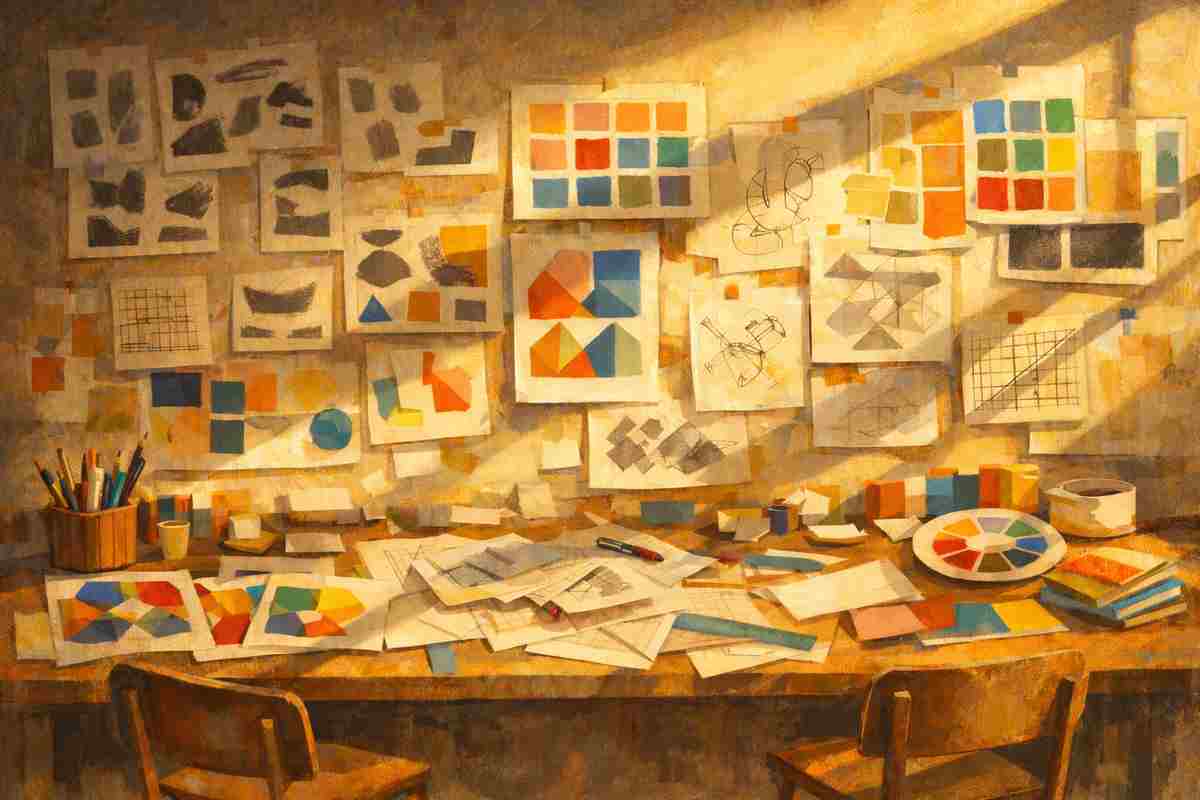
I put five elements on a screen second week of class and I say arrange them. Most students center everything, spread it out equally, assume that balance means equal spacing and equal visual weight. One student keeps rearranging. She takes the elements and puts them asymmetrically, clusters some, isolates others, creates tension by making the spatial relationships unequal. When I ask her why she arranged it that way, she can’t explain it. She just knows it feels better. The arrangement without explanation is frustrating, but what’s interesting is that she can see something the others can’t. The others see elements. She sees relationships. They see objects. She sees composition. And my job for the next four years is going to be giving that feeling a name she can use deliberately.
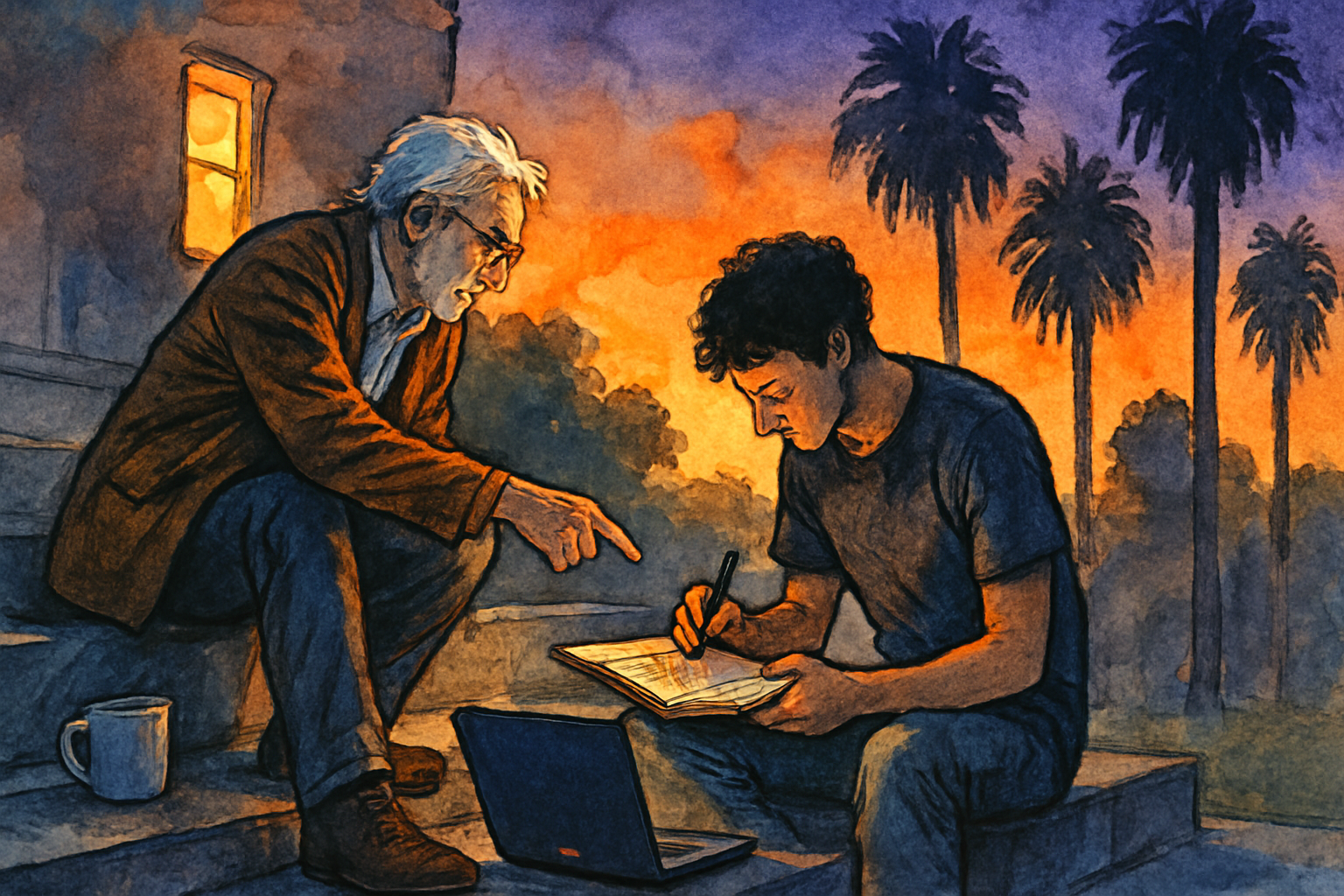
That’s the thing about teaching design that most people don’t understand. You’re not teaching people how to use software. You’re not teaching them the rules for where to put things. You’re teaching them how to see, and how to translate what they see into something other people can understand. It’s a perceptual skill that translates into every other discipline. The engineer who understands composition understands how systems relate to each other. The doctor who understands visual hierarchy understands how to prioritize information in a way that saves lives. The parent who understands balance understands how to distribute their attention across competing needs.
When parents ask me what their kids can do with a design degree if they don’t end up designing, I tell them everything. I tell them that every person who has to communicate clearly, who has to present information in a way that people actually understand, who has to build trust through visual presentation, who has to figure out why some messages land and others fall flat, those are design skills whether they know it or not. The designer is just the person who does it consciously. Intentionally. The designer is the person who’s spent time learning to see so clearly that they can make you see too.
Design is thinking made visual.
— Saul Bass
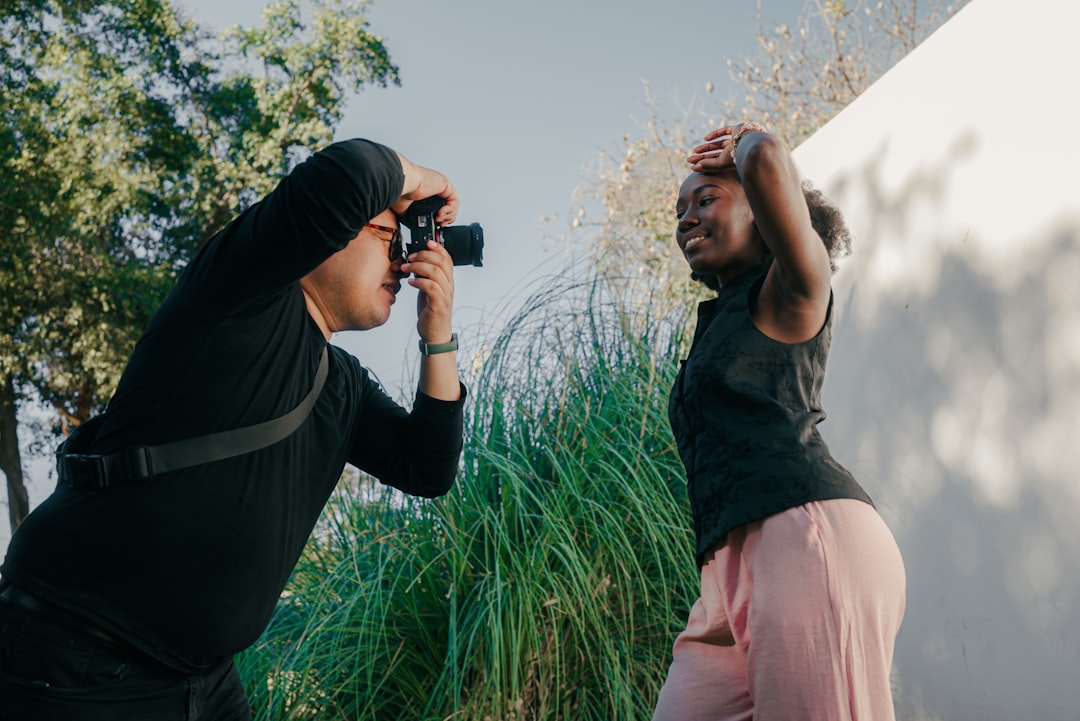
Around ninth grade I stopped looking at the world the way a normal person looks at it. I got a camera, and my eyes became different. I would spend ten minutes watching light refract through a raindrop. I would sit with a rose petal and study the way dew bent the morning light. Not because I was supposed to. Not because anyone was teaching me. But because something in the way that light moved through water asked me to pay attention. And that kind of attention, that’s what design is. Design is not decorating. Design is not making things pretty. Design is paying attention to what’s actually there, and then figuring out how to make other people see it too.
But because something in the way that light moved through water asked me to pay attention.
Greg Williams
There’s a classroom exercise I give early in the semester. I send students into a space they’ve been in a hundred times. A building they walk through every day. A street they drive down regularly. And I say find ten things you’ve never noticed. Most of them think it’s easy. It isn’t. They come back reporting ceilings they’ve never looked at, patterns in tile floors they’d walked on a thousand times, the way afternoon light changes the color of a wall, the architectural details that only appear when you actually stop and look. One student said it made her feel like she’d been sleepwalking through her own life. And that’s what design teaches that almost no other discipline does. It teaches you to wake up. It teaches you to pay attention to what’s already there.
The reason everyone should study design is because the world is broken because nobody’s paying attention. We build cities that are hostile to the people who live in them and then we act surprised when they’re unhappy. We create interfaces that confuse people and then we blame the people for being confused. We design systems that exclude entire groups of people and then we act shocked when those people fall through the cracks. And the reason all of this happens is because somewhere along the way we stopped looking. We stopped seeing the actual experience of the actual people who have to live in the systems we’ve created. We just built it the way we thought it should be and then moved on.
Design education teaches you that that’s not acceptable. It teaches you that you have an obligation to see, to understand, to pay attention to the actual experience of the people interacting with the thing you made. It teaches you that if someone’s confused by your interface, that’s not their problem. That’s your problem. You didn’t see clearly enough. You didn’t make the intention clear enough. You didn’t pay enough attention to what they actually needed.
That skill, that perceptual skill, that obligation to see, that’s what we need more of everywhere. We need doctors who pay attention to the actual experience of patients instead of just the disease. We need engineers who pay attention to the actual experience of users instead of just the technical specifications. We need leaders who pay attention to the actual experience of the people they lead instead of just the strategic goals. We need teachers who pay attention to the actual experience of students instead of just the curriculum. Design teaches you that. It teaches you to see. And once you learn to see, you can’t unsee it. You move through the world noticing things. Noticing failures. Noticing opportunities. Noticing places where someone didn’t pay attention and places where someone really did. And then you can’t help but try to fix it. You can’t help but try to make things better. That’s the thing about studying design, even if you never design anything professionally. You learn to see, and seeing is the first step to changing anything. So yes, your kid should study design. Not because they should become a designer. But because they should become the kind of person who actually looks at the world and understands how to make it better for the people in it.
You learn to see, and seeing is the first step to changing anything.
Greg Williams
For Further Reading
Posts that connect to the themes explored here.
- More from Greg Williams — Additional posts on design, creativity, and teaching.