I have had important work sit on my desk for months, and I mean the work that matters most to me, the work I actually care about, and the reason it sat there was not laziness and it was not overwhelm and it was not that I didn’t know what to do next. I knew exactly what to do next. I could see the next step clearly. I could have done it in twenty minutes. And I did not do it for four months, and during those four months I reorganized my office twice, learned a new software platform I didn’t need, deep-cleaned the garage, started three other projects that were less important, and answered every email in my inbox within fifteen minutes of receiving it, which if you know me is a sign that something has gone very wrong because I am not an email person under normal circumstances.
Here’s the thing about procrastination that nobody explains well, and I think it’s because the people writing about procrastination are usually writing about the simple kind, the kind where you just don’t want to do the dishes or you’re putting off your taxes because taxes are boring. That kind of procrastination responds to the usual advice. Break it into smaller steps. Set a timer. Do the hard thing first. Reward yourself. Fine. That works for tasks you don’t care about. But there is another kind of procrastination that is something else entirely, and it’s the kind that creative people and designers and writers and builders know intimately even if they’ve never had a name for it, and it is this: you are not avoiding the work because it doesn’t matter. You are avoiding the work because it matters so much that doing it puts something at risk that you are not ready to lose.
What you’re protecting, and this took me years and some genuinely painful self-examination to figure out, is usually an identity. A belief about yourself. A story you’re carrying about what you’re capable of. As long as the work stays unfinished, the potential is infinite. You could be brilliant. This could be your best thing. The idea in your head is perfect and luminous and important. But the moment you actually sit down and do the work, the moment you open the file and start making decisions, potential collapses into reality. And reality has flaws. Reality has limitations. Reality reveals that the thing in your head and the thing your hands can make are not the same thing, and that gap, that specific gap between the imagined version and the actual version, is what your procrastination is protecting you from having to see.
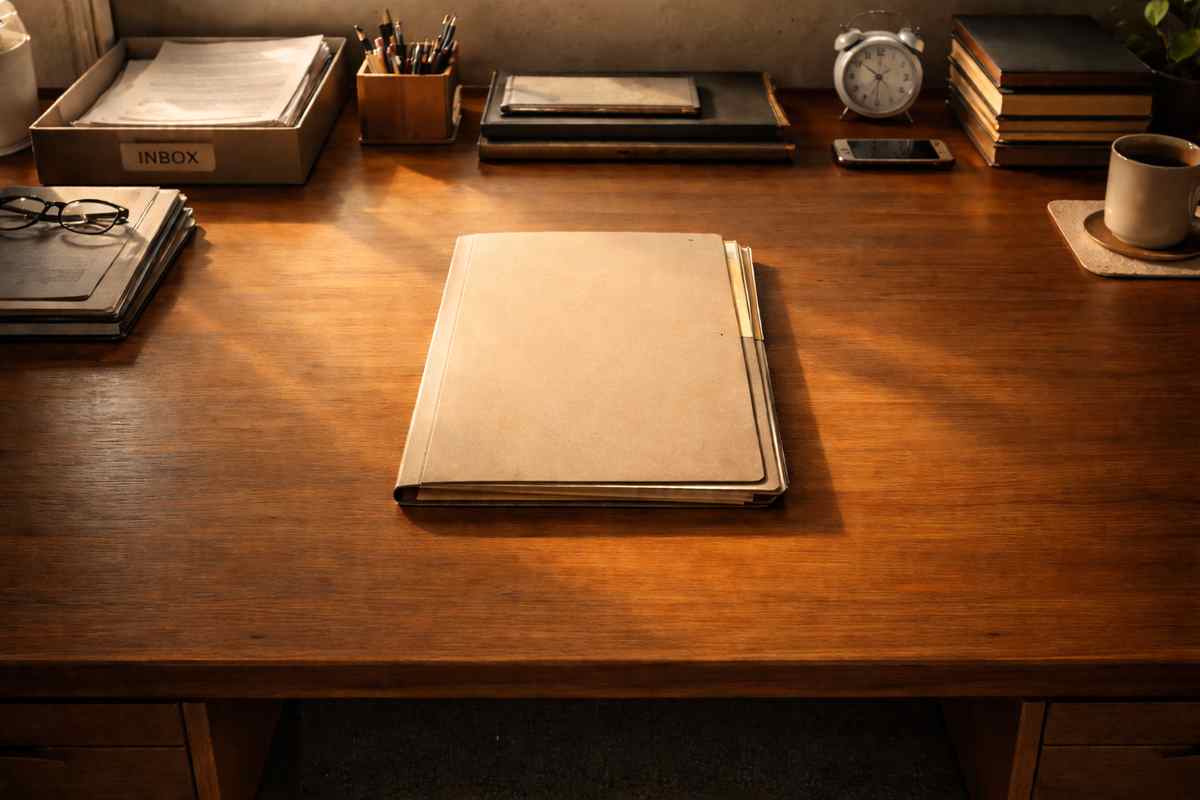
I’ll give you an example from my own life because I don’t think abstract descriptions of this help anyone. I had a project, a big one, something I’d been thinking about for years, something I believed could genuinely matter, and I had all the pieces. I had the research. I had the framework. I had the connections. I had the time. And every single morning I would sit down at my desk, look at the folder, and then find something else to do. Not dramatically. Not with anguish. Very calmly, very rationally, I would decide that today I needed to handle this other thing first, or that I should probably do some more research before starting, or that I wasn’t in the right headspace, or that Monday would be a better day to begin because Mondays have that fresh-start energy. And Monday would come and I would decide that actually Wednesday would be better because by Wednesday I’d have handled the backlog from the weekend. You know the dance. You’ve done it. We’ve all done it.
When I finally stopped and asked myself what I was actually afraid of, and I mean really asked, not the superficial asking where you say “I’m afraid of failure” and move on feeling like you’ve done the therapy, but the asking where you sit with the feeling in your chest and let it speak, what came back was this: if I fully commit to building this thing and testing it against reality, I might discover it isn’t as good as I believe it could be. And as long as I don’t start, I get to keep the version where it’s extraordinary. Avoidance was letting me live in the possibility space. Commitment would collapse that space into something measurable, and measurable means it can disappoint.
That was the moment everything shifted, not because the fear went away, it didn’t, but because I could finally see what the fear was actually doing. It wasn’t stopping me from working. It was stopping me from being measured. And I had to sit with a truth that I did not enjoy sitting with, which is this: unproven brilliance has zero external impact. The perfect project in your head that you never build helps no one. The beautiful book you never write sits in a drawer of potential that nobody can read. The design that lives in your imagination and never makes it to the screen is, from the perspective of every single person who might benefit from it, identical to a design that doesn’t exist. You can be as brilliant as you want in private and it means nothing until the work is real and imperfect and in the world.
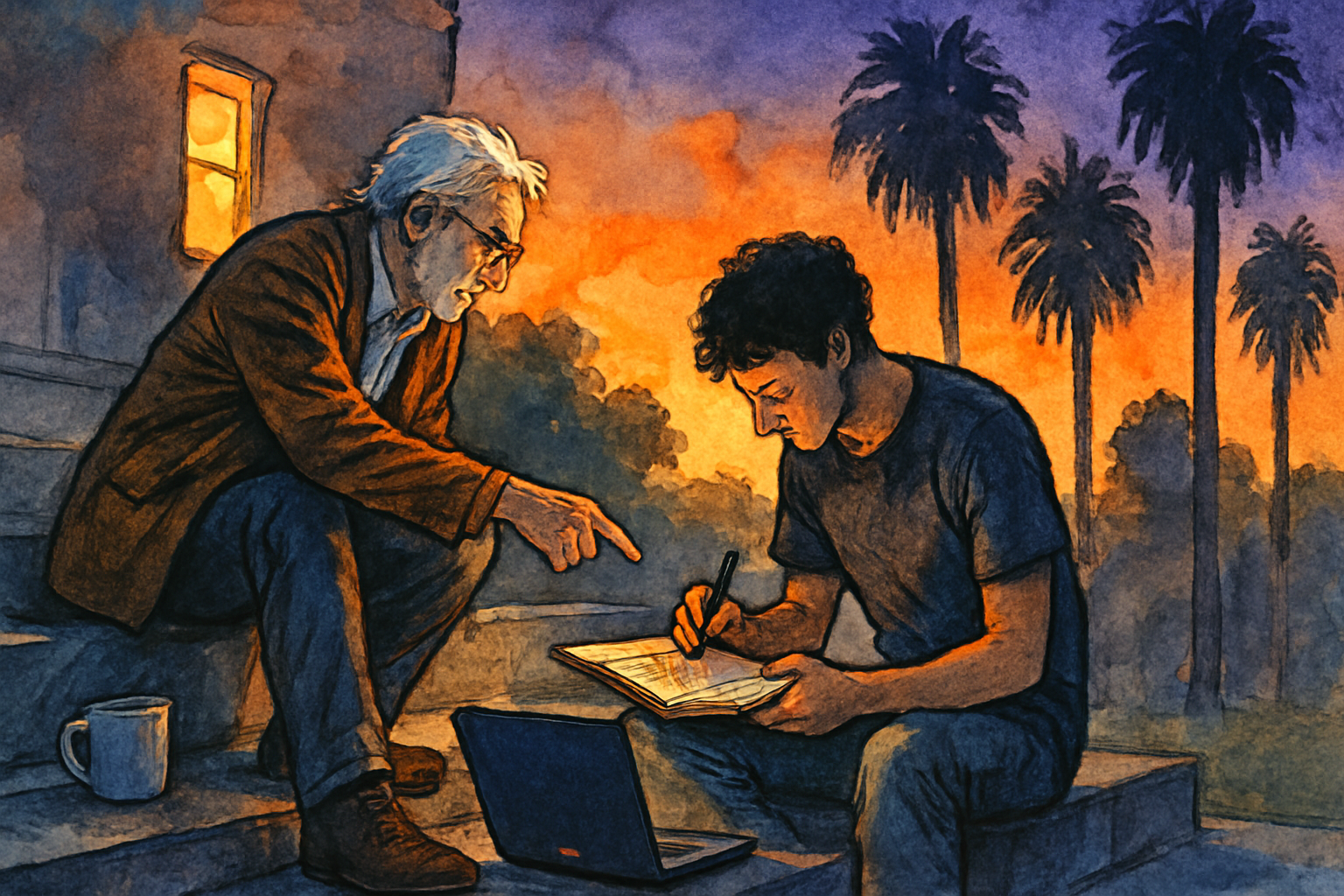
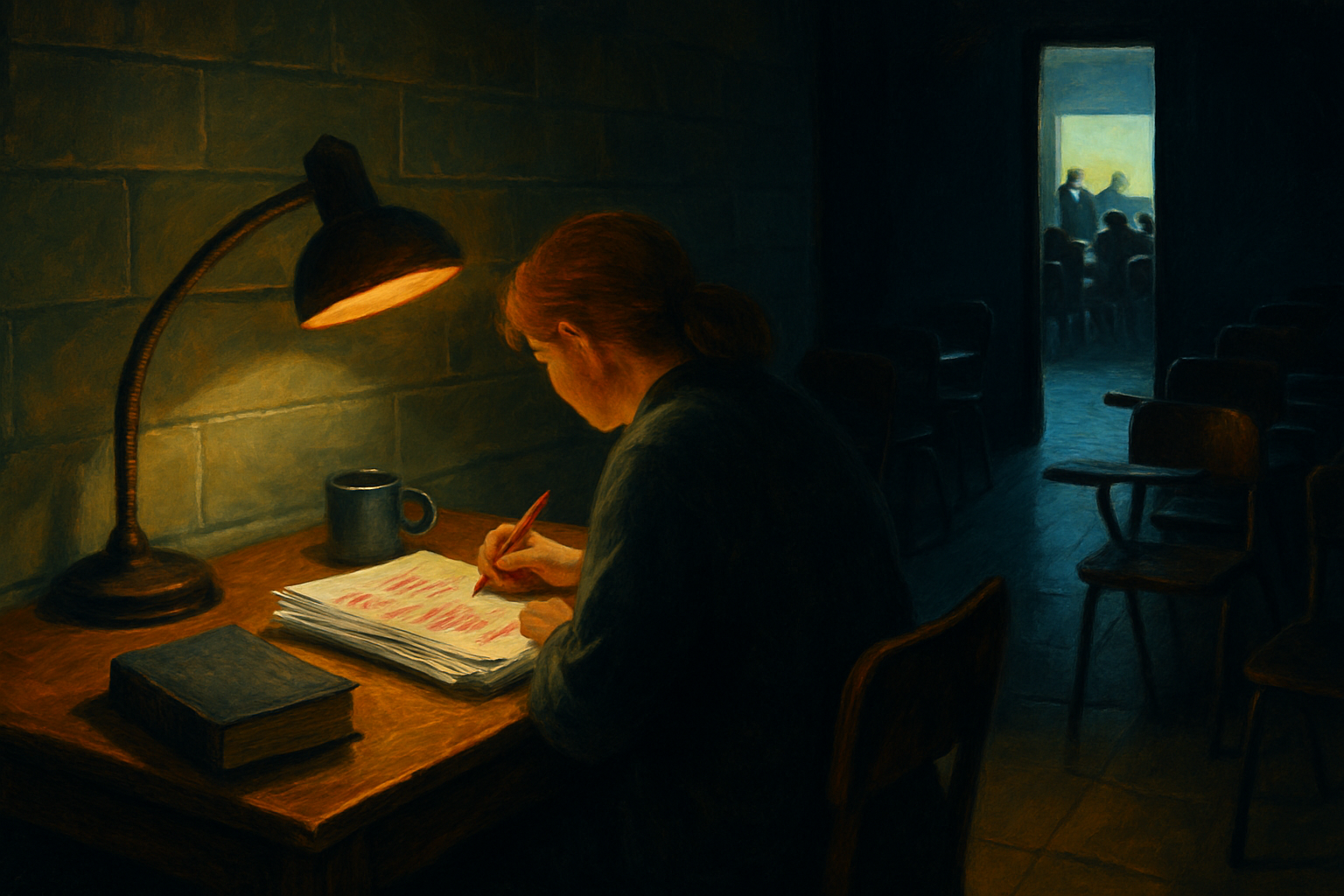
I teach students who do this and I recognize it instantly because I can smell my own. The student who has been “working on” their portfolio for six months and it’s still not ready. The student who talks about their capstone project with real passion and clarity and then produces almost nothing because every attempt falls short of the version in their head. I sit with them and I don’t tell them to break it into smaller steps because that’s not the problem. The problem is that they’re protecting a story about themselves, and the work, if it gets finished, might rewrite that story, and they’re not ready for the revision. So I ask them: what are you afraid this will reveal? And the room gets very quiet. And then we talk about the real thing.
The cure, if there is one, and I want to be honest that I still struggle with this, is not discipline and it’s not motivation and it’s not a better app or a stricter schedule. The cure is lowering the stakes on the first attempt. Not lowering your standards permanently, just lowering them for the first version. Give yourself permission to make something that proves the concept without having to be the masterpiece. The worst possible version, made in ten minutes, with full permission to be terrible, does something that no amount of planning can do: it collapses the potential into something real. And real, even when it’s rough and embarrassing and miles from what you imagined, is the only place where improvement can happen. You cannot improve a thing that doesn’t exist. You can only protect it.
So the next time you find yourself reorganizing your desk instead of doing the work you actually care about, and you know the work I mean, it’s the one that’s been sitting there, the one you think about at night, the one that makes your chest tight when you consider actually starting it, maybe don’t reach for the productivity advice. Maybe instead ask yourself: what am I protecting? What story about myself does this unfinished work let me keep? And what would happen if I let that story go and made the worst possible version of the thing, right now, in the next ten minutes, just to see what’s actually there?
You might be surprised. I was. The thing I’d been protecting for months turned out to be more resilient than I thought. It survived contact with reality. It wasn’t what I’d imagined. It was different, and in some ways it was better, because reality added texture that my imagination couldn’t have predicted. But I had to let go of the perfect version to find that out. And that letting go, that’s the hard part. That’s what the procrastination was really about all along.
Further Reading
- Ideation for Everyday Design Challenges (NN/g) — Practical ideation methods for generating ideas
- Design Thinking 101 (NN/g) — Foundational overview of design thinking
- What Is Creativity? (IxDF) — Foundations of creativity and creative thinking