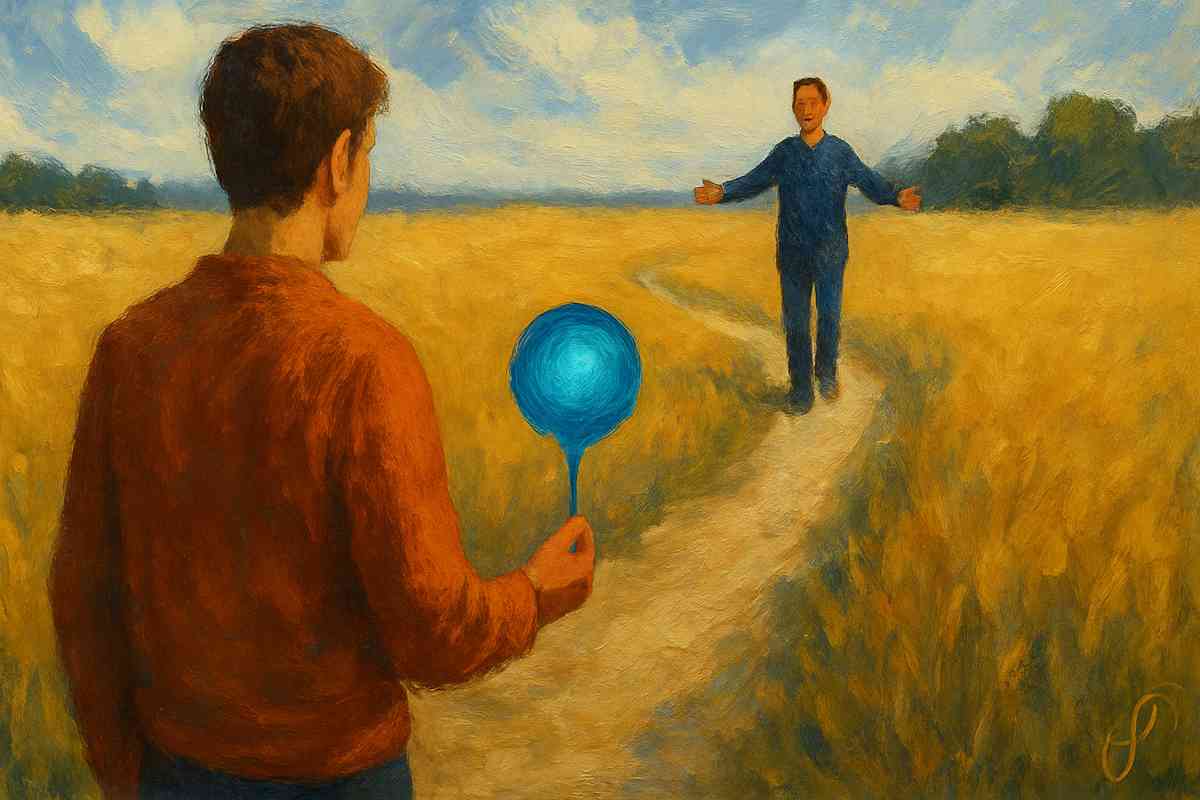
I’m going to say something that people usually don’t want to hear, but I’ve been teaching for twenty-five years so I’m going to say it anyway: you didn’t learn to be more creative. You learned to stop interrupting it. Creativity isn’t a skill you develop; it’s a default state you were born with and then slowly, systematically learned to suppress, usually with good intentions and by people who loved you. I know that sounds bleak, but the moment you understand that, everything changes because now the job isn’t to add something you don’t have. It’s to remove what’s been blocking it.
There’s a piece of research that sits at the center of everything I believe about this work. When you test kindergartners on creative thinking, 98 percent of them test as highly creative. When you test adults on the same measures, 2 percent do. That’s not because 96 percent of people got worse at thinking creatively. That’s because 96 percent of people got conditioned, trained, and convinced that creativity wasn’t safe. We taught them that there was a right answer and a wrong answer, that color outside the lines was a mistake, that the most important thing was to do what you were supposed to do and not to rock the boat. We did that because we thought we were helping them fit in and be successful and not get hurt. And we were wrong.
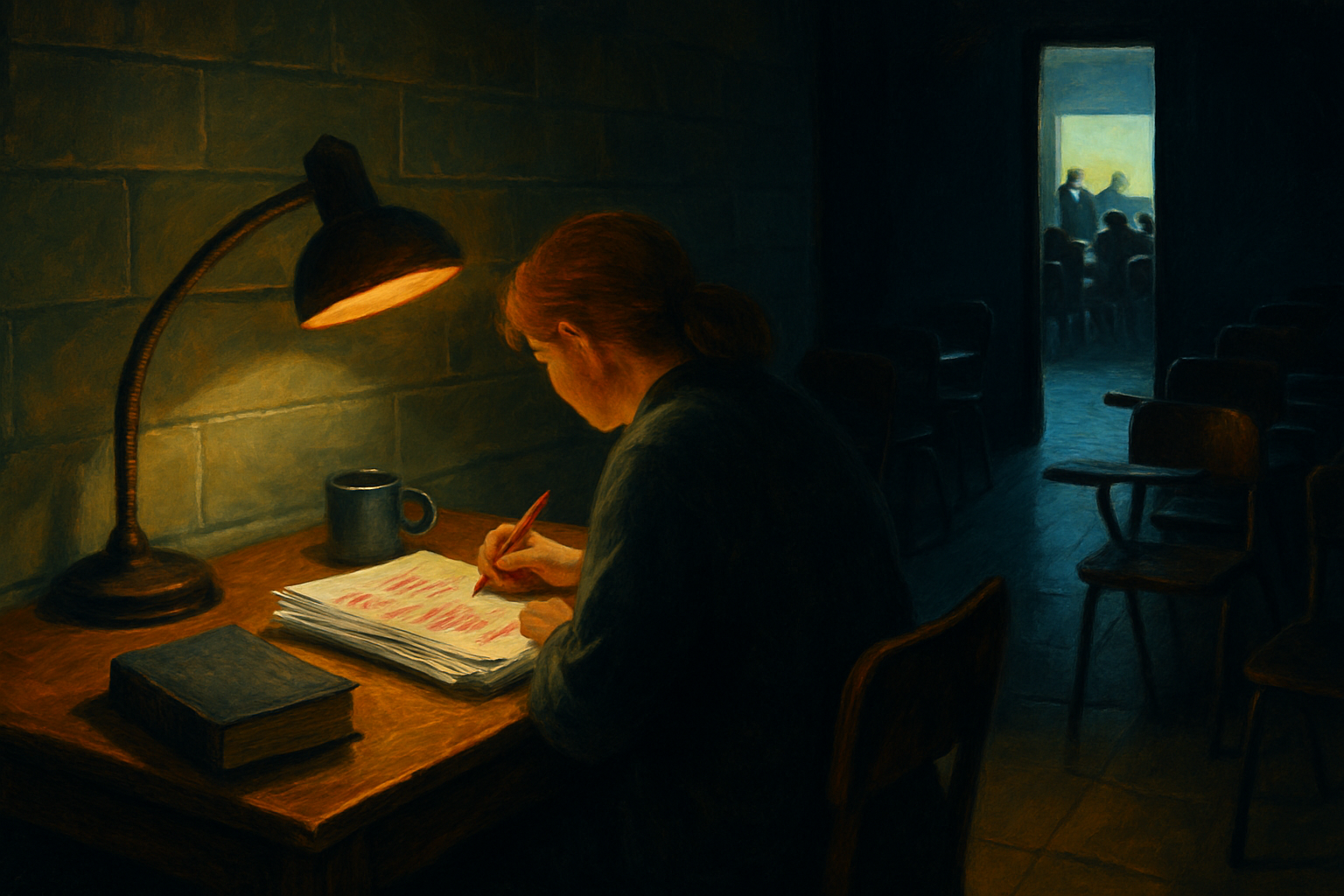
I’ve watched this happen in real time for a quarter century in my classroom, and I’ll tell you exactly how it looks. A new student comes in, usually an advanced student, someone who’s already learned to draw pretty well. They can make a technically correct drawing; they understand perspective and anatomy and proportion. Their work is hollow. It’s skillful and dead. There’s nobody in it. And I know why immediately. They learned early that the goal was to make something correct, not to make something true, and those are completely different things. Technical skill in the absence of permission to be yourself is just obedience with better tools.
Then I’ll have a beginner student, someone who has no training and frankly can’t draw very well, but something is alive in their work. There’s a person in it. There’s risk. There’s something they wanted to say and they said it however they could, and you can feel them in every line. The beginning student still remembers something the advanced student had trained out of themselves: that the goal is to say something, not to say something correctly.
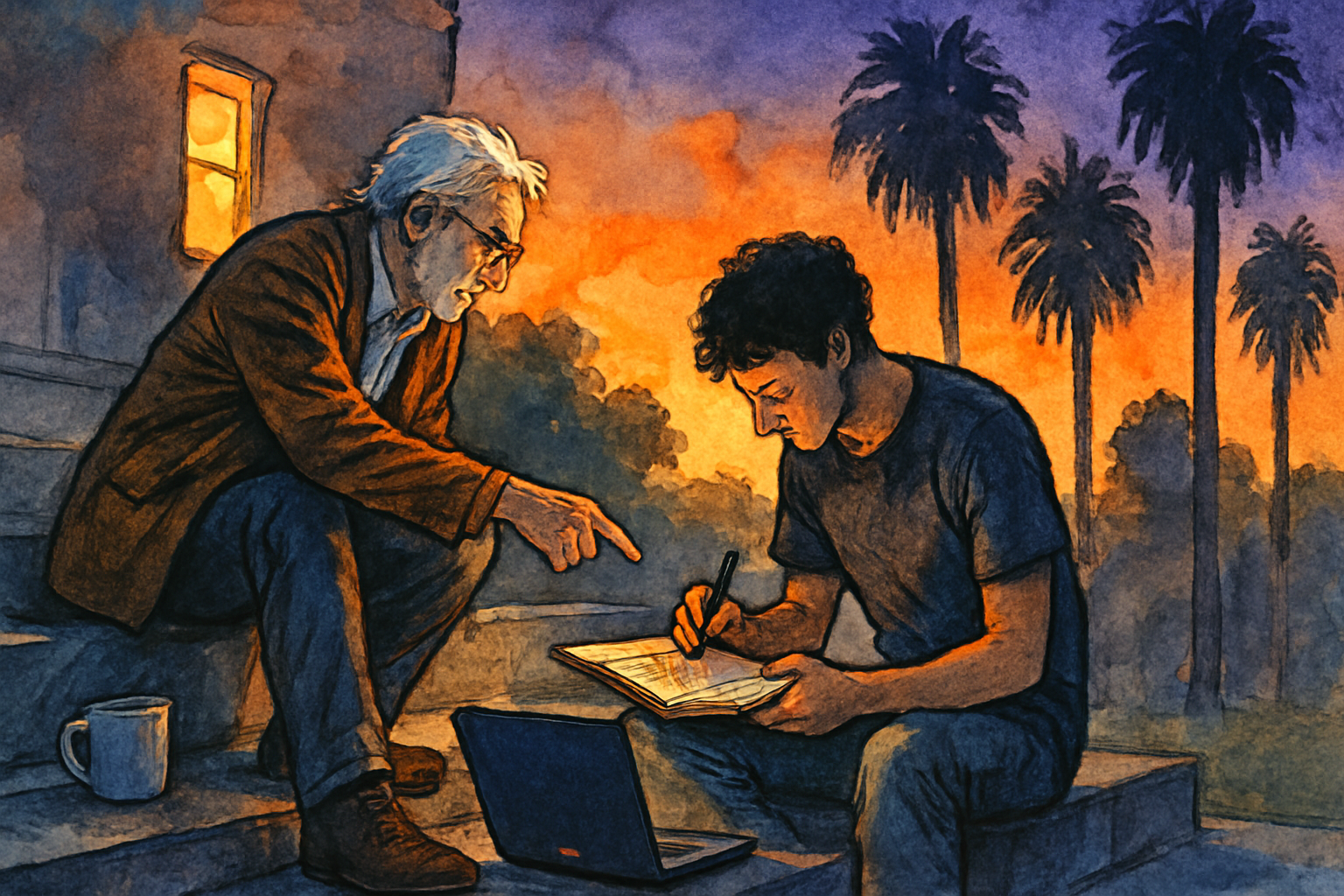
Here’s what happens when I work with the advanced students. I don’t try to teach them to be more creative. I try to get out of the way of what they already have. I’ll say something like, “Put away your training for a minute. I want you to make something that feels true to you, and I don’t care if it’s technically correct. I don’t care if it’s proportionally accurate. I care if it’s honest. Can you feel the difference?” And sometimes it takes a while because they’ve spent years training themselves not to feel that difference, but when it clicks, when they remember that they have permission to be themselves in their own work, that’s when something starts to move.
I built the 650 creativity exercises with this understanding at the core. I wasn’t trying to develop creative skills in people. I was trying to create a structure where it would be safe to remember what they already knew how to do. Each exercise is designed to move past the part of your brain that argues and edits and wonders if you’re doing it right, and into the part that knows. The exercises aren’t about learning something new; they’re about permission. They’re about creating a situation where the only way to move forward is to trust something you already have inside you.
I ran an experiment with artificial intelligence going through the 650 exercises sequentially, holding insights forward from one exercise to the next, to see if an AI system could become more creative by actually doing the work. And what happened was interesting: growth wasn’t linear. There were plateaus, long stretches where nothing seemed to shift, and then around exercise 400, there was an explosion. And then another one around 550. It wasn’t that the system learned new skills. It was that at certain points in the sequence, it seemed to unblock something. It seemed to remember something.
The question I asked myself after that was whether something similar happens with humans, and I’ve been observing it for years now. When a student hits exercise 35, they’re still mostly in their head. By exercise 150, something has shifted. They’re more willing to be wrong. By exercise 350, they’ve started to trust something in their own thinking that they had learned not to trust. By 500, some of them are producing work that has their whole personality in it, not because they became more skillful but because they became less afraid.
So if you’re sitting with the idea that you’re not a creative person, you know what I want you to do? Forget everything you think you know about what creativity is. Forget the idea that it’s a thing you either have or don’t have, that some people are creative and most people aren’t. Stop believing that lie because it’s a recent one, and humans didn’t believe it until we built schools and workplaces that had to grade everyone on a curve and make sure there was one right answer.
You were creative before you had any training. You knew how to play; you knew how to say things your own way; you knew how to make something that was true even if it was weird. You didn’t lose that. It’s still in you. You just learned to interrupt it, and the interruption got so automatic you stopped even noticing you were doing it. The work isn’t to become creative. The work is to stop interrupting the creativity that never went away. What would you make or do or say if you gave yourself permission to be exactly who you are while you were doing it?
Further Reading
- Ideation in Practice (NN/g) — Protecting the ideation phase
- What are Creative Blocks? (IxDF) — Judgment interrupting generation