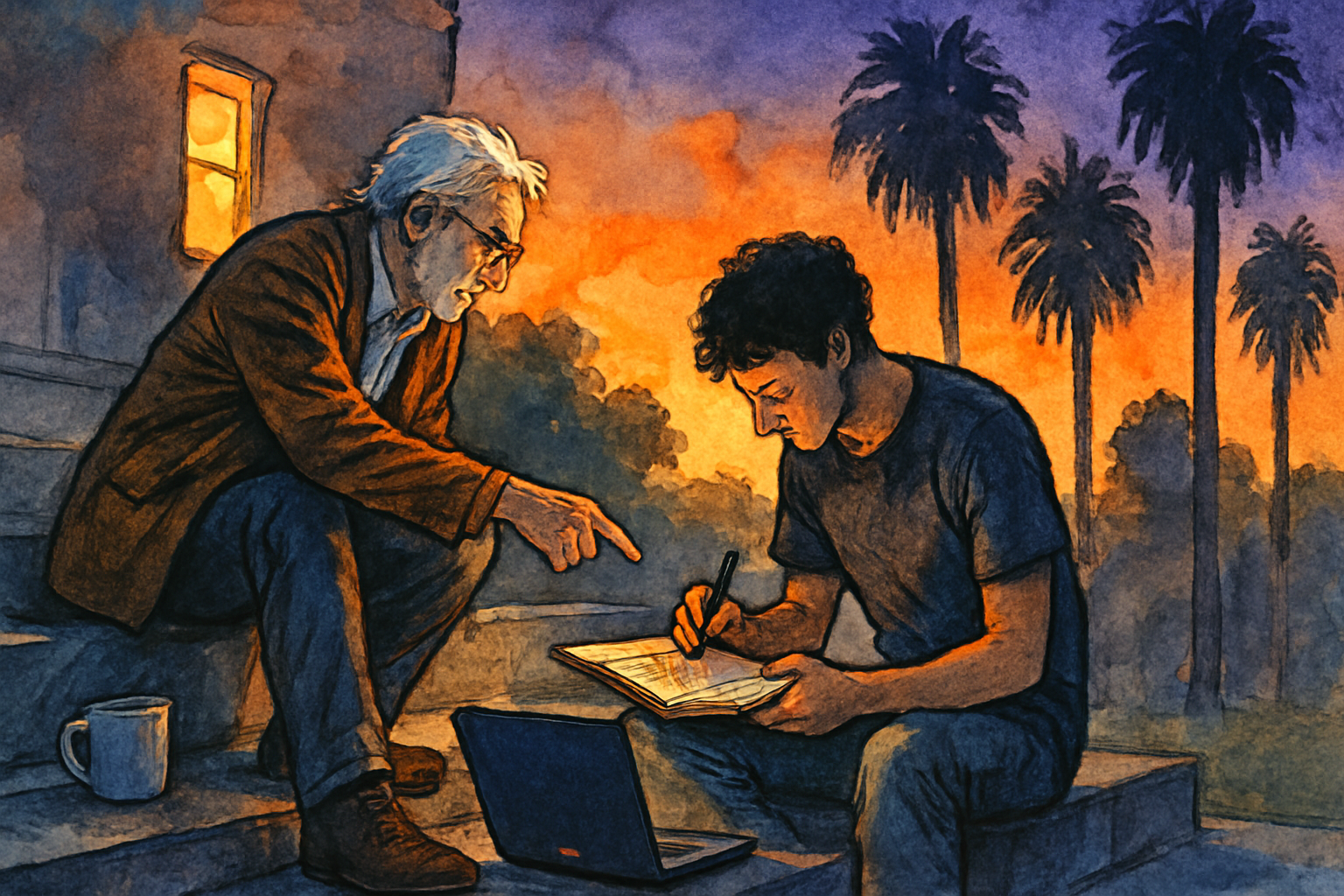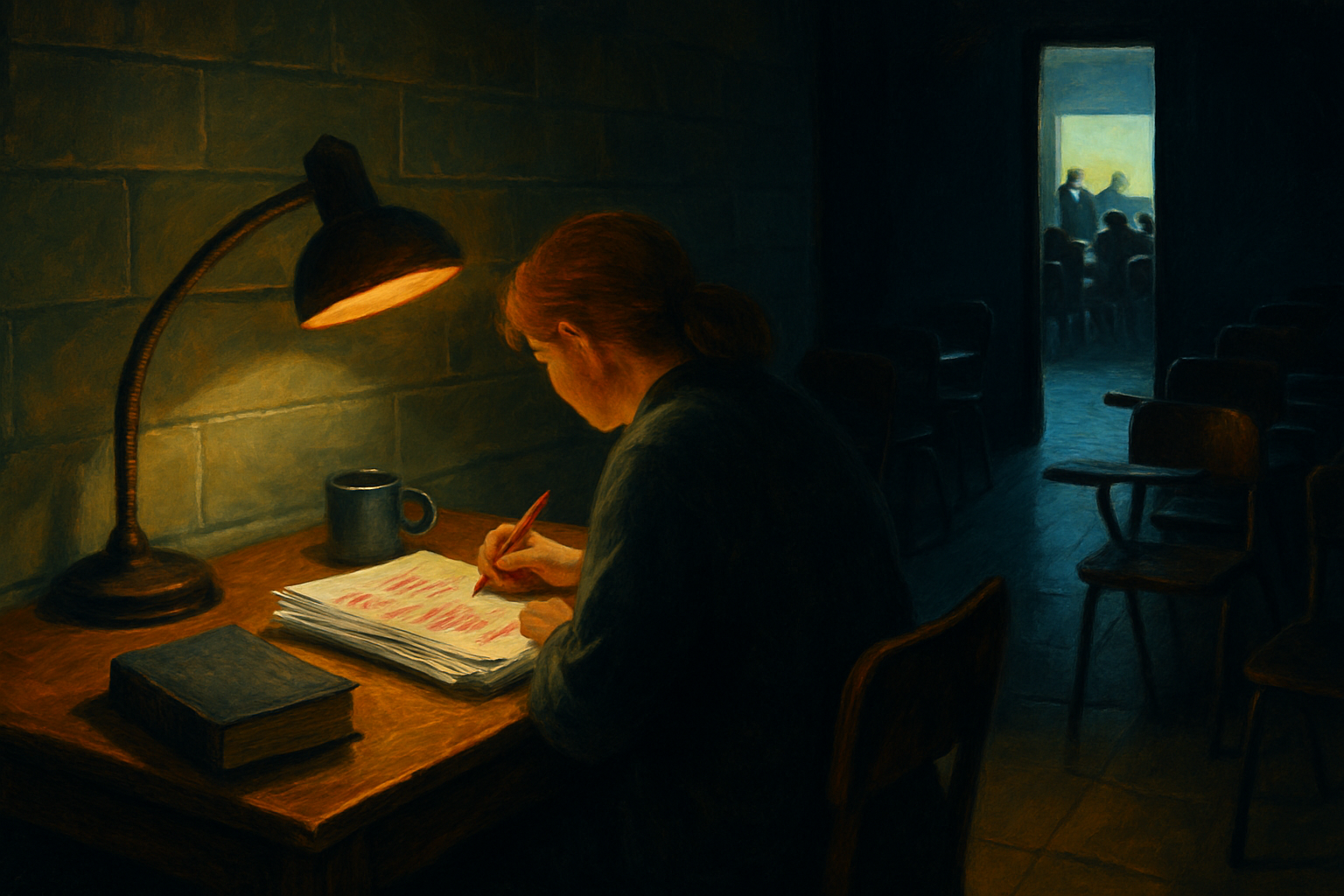
You arrive at a creative moment and something won’t let you move forward. Not because you don’t know how. Because something inside says you can’t. The work isn’t good enough. You’re not the kind of person who does this. You should have a fully formed idea before you start making. You can’t take the risk of being wrong. You can’t be honest about what you actually think because people will judge you. You can’t grieve the ideas you had to abandon because that makes you weak. You can’t collaborate with people who disagree. You can’t rest between creative cycles because resting means you don’t care enough. Every single one of those is a permission you didn’t grant yourself. I’ve spent twenty-five years as a design teacher watching students hit these walls. They know the tools. They understand the principles. But something inside says no, and they stop.
When I finished processing all 650 exercises from Playing With Purpose, I extracted 129 operational principles organized into 13 domains. I thought at first these were techniques or methods. But looking at them together, organized by what they actually accomplished, I realized something that changed how I understand creative blocks. These 129 principles aren’t techniques. They’re permissions. One hundred twenty-nine specific removals of the “no” that lives in your nervous system. Permission to make bad work. Permission to observe without interpreting. Permission to feel grief about abandoned directions. Permission to be vulnerable in public. Permission to think out loud when you haven’t finished thinking. Permission to collaborate without knowing where it’s heading. Permission to risk being wrong. Permission to stop in the middle. Permission to rest when depleted. Permission to discover what you think by making instead of by planning.
Creativity follows a specific sequence that stalls when it collapses. The sequence is: Generate, Observe, Meaning, Judge. You generate without judging. Observe without assigning meaning. Sit with the material and let it show you what’s there. Make meaning from what you observed. Finally judge and commit. When it works, it feels like discovery. When it breaks, you’re stuck. Most stalling happens when one phase collapses into another.
The most common collapse is judgment invading generation. You have an idea and start exploring it. But before you’ve made anything, a voice starts judging. That’s not quite right. That’s too weird. That’s been done before. So you stop generating and revise the idea before making the first version. That’s not how generation works. Generation is permission to make bad work, to make work that’s nothing like what you intended because your hands discovered something your mind didn’t know was there. If judgment runs in parallel with generation, generation stops. You end up with a refined idea and no actual material. All those exercises about permission to start, permission to play, permission to make mess, exist to remove that block. They’re permissions.
The second collapse is observation getting invaded by meaning-making. You make something and don’t stop to see what you made. You immediately assign meaning based on your intention. Either way, you’re not observing the material. You’re checking it against your plan. Observation is a skill requiring a permission most of us don’t have: permission to find value in what you made even if it wasn’t what you intended. Permission to be surprised by your own work. Permission to follow where the material is going instead of where you planned. The Curiosity domain exercises, about discovery and attention and noticing texture, are permissions to observe. They remove the block that turns observation into plan-checking.
The third collapse is meaning-making invaded by judgment. You look at what you made, understand what it’s saying, and a voice starts evaluating. That meaning is too vulnerable. That’s too honest. So you interrupt understanding and revise the meaning to be more acceptable. But then you’re no longer discovering the meaning in the work. You’re imposing a safer version. The work becomes polished but false. All those exercises about creative lineage, about understanding you’re part of a living chain of makers, about permission to say what only you can say, exist to remove that block. They stop you from betraying the meaning your work contains in favor of something more marketable.
And then there’s the fourth collapse: work that’s been judged staying unfixed. You judge the work, understand what’s happening, and can’t commit to revision because you’re unsure if your judgment is right. You keep circling. The work sits. Exercises about decision and embodied knowing address this. They’re permissions to commit. Permission to trust that your judgment, arrived at through the full sequence, is trustworthy. Permission to revise and then stop and let it go. Permission to be wrong and learn from it.
All 129 principles answer one question: what’s stopping the sequence? Every one is permission you need to grant yourself. Permission to have no idea where you’re starting. Permission to be bad before you’re good. Permission to collaborate with people who think differently. Permission to have embodied knowledge your mind hasn’t caught up with. Permission to feel your creative lineage matters. Permission to be vulnerable because you have something only you can say. Permission to take a risk that might not pay off. Permission to rest. Permission to share work when it’s still forming.
This framework differs from most creativity books in that it’s not teaching you techniques. It’s removing permissions you already have but don’t act on. It’s addressing your nervous system, trained through thousands of small moments to say no. Your nervous system learned to judge while generating because your work needed to be right the first time. It learned to assign meaning based on intention because you were rewarded for explaining what you meant instead of discovering what emerged. It learned to revise meaning toward safety because vulnerability was dangerous. All of that makes survival sense. It just makes terrible creative sense.
What happens at exercise 400, when Collaboration opens up, is that you’ve finally built enough permission architecture in your individual practice that you can extend it into the relational space. You can’t collaborate authentically with people until you can already generate without judging, observe without interpreting, make meaning without defensive revision. You need that internal permission structure first. That’s why the domains arrive in the order they do. Individual mechanics first, then embodied awareness, then the relational and vulnerable capacities. You can’t get to the real power of collaboration or risk or generosity until you’ve built the foundation. And that foundation is made of permissions.
If you feel like you’re stalling creatively, before looking for a new technique or method, ask which permission you’re missing. Where is the sequence breaking? Can you generate without judging? Observe without interpreting? Make meaning without defensive revision? Commit to judgment? Collaborate without flattening yourself? Risk honestly? Rest? Grieve? Start there. One permission at a time. The real change lives in nervous system retraining that happens when you practice a specific permission, graduated and accumulated, until your body knows it’s safe to proceed.
For Further Reading
Explore these resources for deeper context on the ideas in this post.
- Design Thinking Activities (NN/g) — Structured exercises to foster creative thinking
- What is Creative Thinking in UX/UI Design? (IxDF) — Creative approaches to solving design problems