—
It’s the early 1990s and I am standing in a Caracas hotel lobby, probably looking exactly like what I was, which was an American businessman who had read one too many “how to do business internationally” books and not nearly enough about what it actually means to show up in someone else’s world and ask them to work with you. I was building out my Latin American business at the time, and I had this theory, you know, this very confident, very uninformed theory, that if you spoke slowly and clearly enough in English, people would meet you where you were. And the hotel staff in Caracas, they were absolutely fluent in English, by the way, I found that out later, but they were not going to speak it. Not to me. Not yet. They pretended they didn’t understand a word I was saying, and I stood there at that front desk doing what Americans do, which is repeat the same sentence slightly louder, as if volume is the universal translator.
And then something shifted in me and I just decided to try. My Spanish was not good. It was, let’s say, enthusiastic and structurally creative. But I made the effort, I stumbled through it, I probably conjugated nothing correctly, and the moment I did, their English appeared. Just like that. Perfectly good English, warm English, helpful English, the English of people who had been waiting to see whether I actually wanted to work with them or just wanted them to work for me. Until I made the effort to speak their language, they pretended they didn’t speak any English. And I have never forgotten that, because I think about it almost every single time I walk into a classroom.
Because here is the thing. You can’t lead someone from where they need to be to where they need to go if you won’t first learn enough of their language to have the conversation. That’s not a metaphor. Well, it is a metaphor, but it also literally happened to me, with a fax machine, in a way that cost me money and dignity in roughly equal measure.
So a few months after Caracas, I had invested in this translation software to help me send monthly fax blasts in Spanish and Portuguese to about 500 Latin American retailers, and I thought this was brilliant, I thought I was ahead of the curve, and one month I was featuring a line called the Landmark Collection, very high-end bridal flatware, we’re talking $100 to $200 per place setting, beautiful stuff, and I wanted to make sure these retailers understood why they should be carrying this line. The software, though, had never encountered the word “landmark.” And so it did what translation software does when it panics, which is find a word that’s close enough, and the word it landed on was “heap.” And then it translated “heap” into Spanish and Portuguese. And so what went out, to every major department store from Canada all the way down to the tip of Tierra del Fuego, was a very enthusiastic, very professional fax explaining why they absolutely needed to stock this magnificante colección de mierda. This magnificent pile of sh**, excuse my language, but that’s what it said. That’s what I told them. Fax machines were exploding. The phone started ringing. “Mr. Williams, do you know what you just sent out?”
I knew. I knew exactly what I sent out, about thirty seconds after I sent it, and there was nothing to do but own it completely and ride it out. But here’s what actually happened. That silly, expensive, mortifying mistake brought me more business in the next six to twelve months than everything else I had done combined. Because I became a person. Not a company, not a catalog, not a form letter in their language but from my world. A person who tried and failed publicly and kept going anyway. They trusted me because I had made myself ridiculous in front of them, and you know, I think about that a lot.
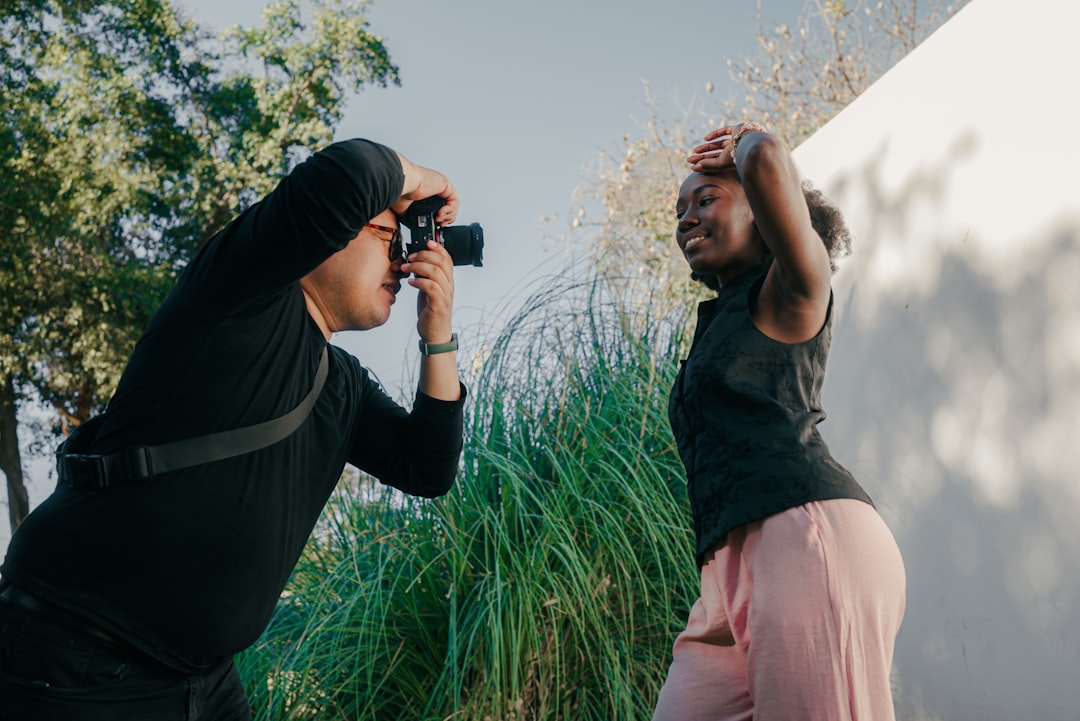
I think about it because teaching is exactly the same thing. For twenty-five years I have been watching instructors, some of them very talented people, stand at the front of a room and teach to the student they wish they had, or the student they remember being, and there is nothing more efficient and nothing more useless. You are not teaching your past self. You are teaching the person sitting in front of you right now, in this moment, with whatever they came in carrying, whatever gaps they have, whatever language they already speak, and your job is to figure out what that language is before you start talking. Not after. Before.
I went to a military school, and I will tell you, the teachers who saved my life, and I mean that without any drama because it’s just accurate, those teachers understood something that I have spent twenty-five years trying to replicate. Mr. Burke, Coach Klein, Mr. Ramsey, they ate in the cafeteria with us, they wandered through the dorms during study hall, they knew who you were as a whole person before they ever graded a single thing you produced. Small class sizes helped, sure, but it wasn’t the class size. It was the intention. They showed up curious about you specifically, not curious about students in general. And that distinction is everything, because students in general don’t exist. There is only this student, sitting here, right now, looking at you from whatever distance they’ve put between themselves and the subject because something made that distance feel necessary.
I don’t demand that students come learn how I learned. I look at them and I ask, genuinely ask: where are you, and how can I lead you to where you need to be by acknowledging where you are and building on that? That question is not a teaching technique. It is not a framework. It is a decision I make every single time I walk into a room, which is to make myself a little bit vulnerable first, to try their language even when I know I’m going to conjugate it wrong, because the moment I do that, something opens up. It’s the hotel lobby in Caracas every single time. Their English appears.
And look, sometimes you send out a magnificante colección de mierda. Sometimes you try to meet a student where they are and you completely misread where they are, and you go back and you try again and you probably still get it partly wrong. That’s fine. That’s actually the work. The trying publicly and failing visibly and not stopping is what builds the trust that makes the learning possible. Students don’t need you to be right. They need you to be real, and there is a significant difference between those two things, and understanding that difference is, for my money, the whole job.
So if you teach anything, to anyone, at any level, let me ask you the same question I ask myself every single day. Where are they, actually, not where the syllabus says they should be, not where they were last semester, not where you would be if you were them. Where are they right now. Go find out. Try their language. Get it wrong if you have to. Keep trying. That’s where it starts.