I sat on the beach at dawn, the sky not yet light, and waited for the hurricane to take me. This was the winter I’d lost everything; my business had collapsed — a dozen international economic conditions all hitting at once, every one of them out of my control, and the cumulative weight of all of them crushing the business my family had built. C. had filed for divorce and taken the kids, I’d lost the house, the income, the access to my children on any schedule I could predict, and I’d moved back into the spare room at my parents’ house at thirty-eight years old. I wasn’t angry at first; I was blank. I would wake up at three in the morning and not be able to breathe, so I’d get up and sit in the living room until dawn and try not to move anymore than necessary.
When the hurricane came, I called the evacuation hotline once, maybe twice, and then I just ignored it. I sat on the beach and watched the wind start to bend the palmettos and I thought about how it might be simpler if the whole thing just ended there, and I waited to see if it would. Somewhere around midnight, I thought about the kids; even though I didn’t have custody, even though I couldn’t see them, the idea that they might find out I’d done that, that I’d just given up, that seemed worse than anything else. So I evacuated, probably the last person in the area to leave, and I came back three days later to a beach covered in palm fronds and broken branches and debris scattered everywhere.
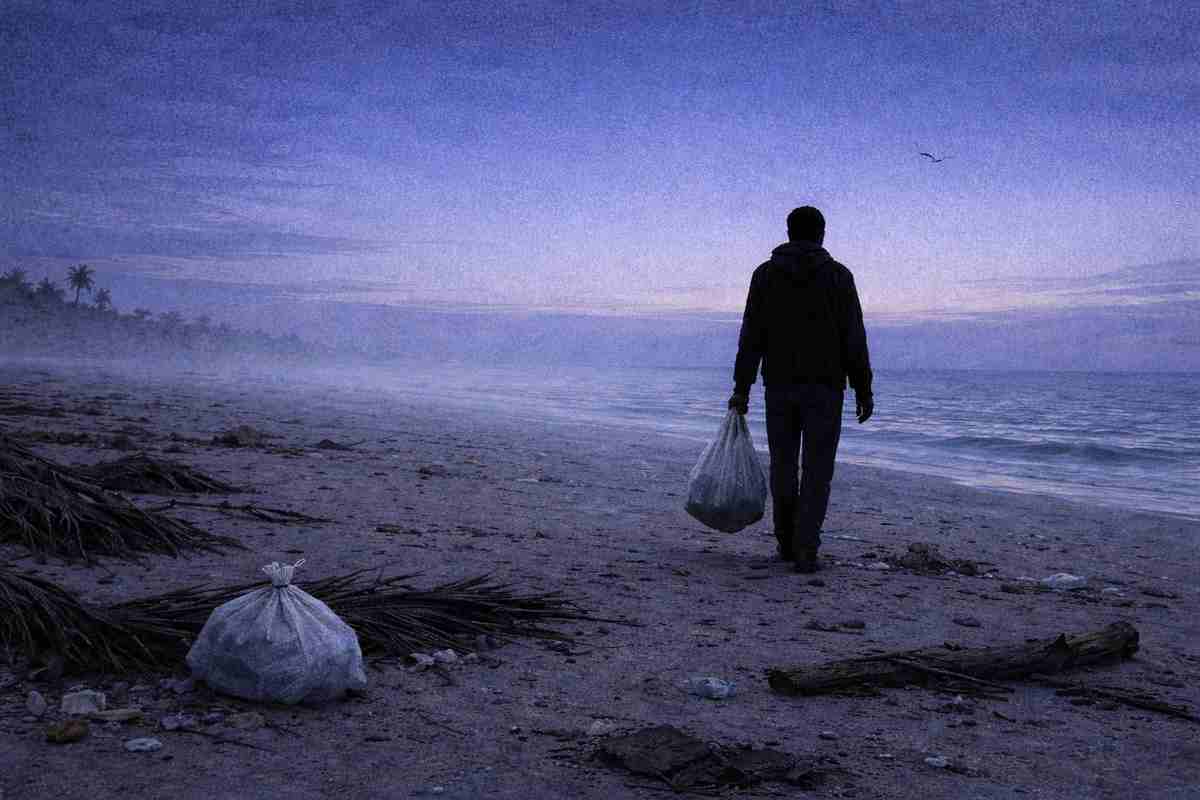
I couldn’t get to my usual spot, the place where I usually walked and thought about the next day. So I started clearing a path, just picking up the pieces closest to me, and I kept clearing, and two hours later I had everything stacked for the Monday cleaning crew, and I sat down on a bench and something shifted. Nobody knows I did that, and I don’t need anybody to know. I didn’t do it for anybody but me. And that felt kind of empowering. I’d lost everything that I thought meant something, and I’d still managed to do something that mattered.
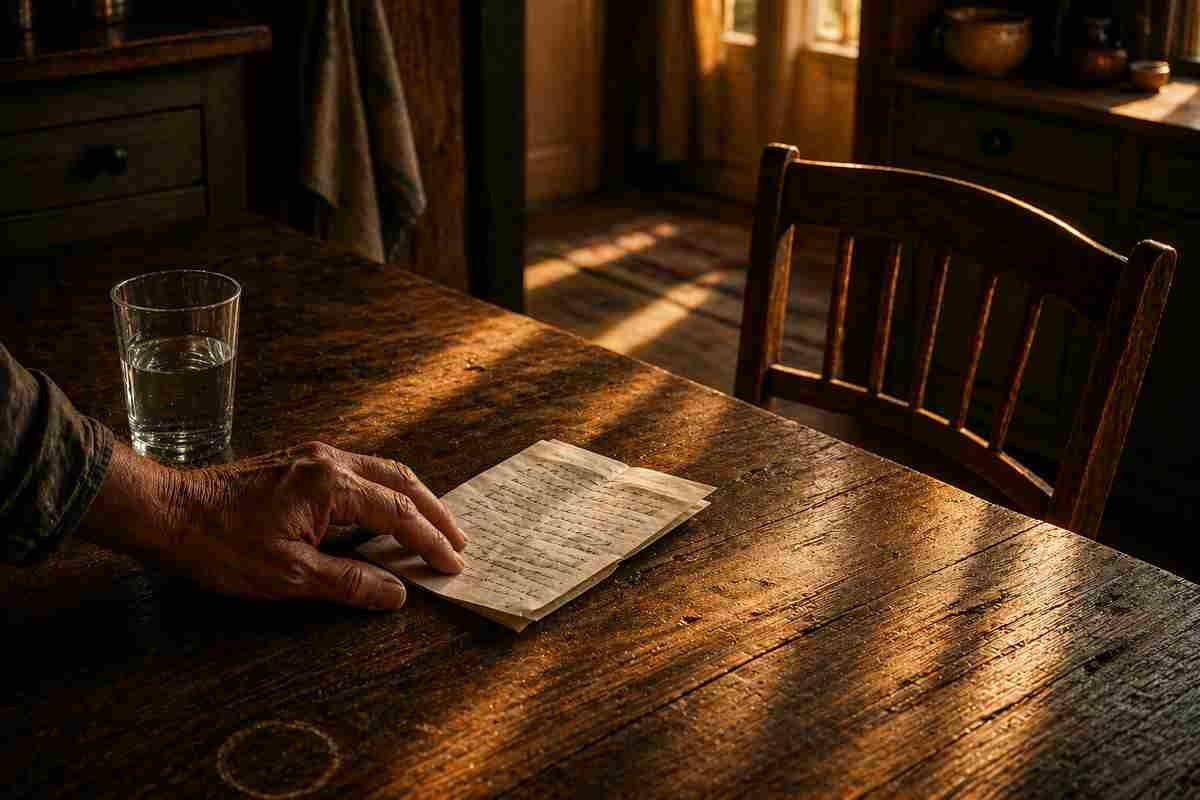
After that, I started walking two miles to the beach every morning, half an hour before sunrise. It wasn’t a punishment; it was the opposite of a punishment. I needed to walk, to move, to be somewhere that wasn’t my parents’ house and wasn’t the rejection of every job interview where they wanted me back in high-pressure sales. And one morning, about a month into this, I found a piece of paper someone had written on. I’m not much good for anything, but I can bend over and pick up a piece of paper. That sentence hit me like a face in the dark, because it was true, and because it was also enough.
Start where you are. Use what you have. Do what you can.
— Arthur Ashe
So I started carrying a plastic bag. One bag per day, whatever fit in it. Trash, paper, fishing line, whatever the ocean had thrown up or people had left behind. I would fill it, and when it was full, I would set it down, and I would keep walking. In thirty days, I could walk two miles to the beach without filling a single bag. That’s a hard statistic; it means I’d learned restraint. I’d learned you can’t clean two miles of highway in one day. You can’t fix everything. You can only do the one right thing in front of you, and then you do the next one, and eventually the beach gets cleaner and you get stronger and you meet people.
I’m not much good for anything, but I can bend over and pick up a piece of paper.
— A note found on the beach
I met a man who went through the dumpsters looking for aluminum cans. I met a man who caught minnows off the causeway every morning before his construction job. I met three immigrant fishermen who were on the bridge at dawn every day. They would have been invisible to me before, or worse, beneath notice. But when you’re on the ground, when you’re doing something nobody’s watching, when you’re doing it for no reason but because it needs doing, you see people differently. They’re real people with real stories, and their stories are a lot more tragic than mine. They’re working while I’m healing. They’re feeding families while I’m figuring out if I’m worth feeding. And they’re kind. Every single one of them was kind.
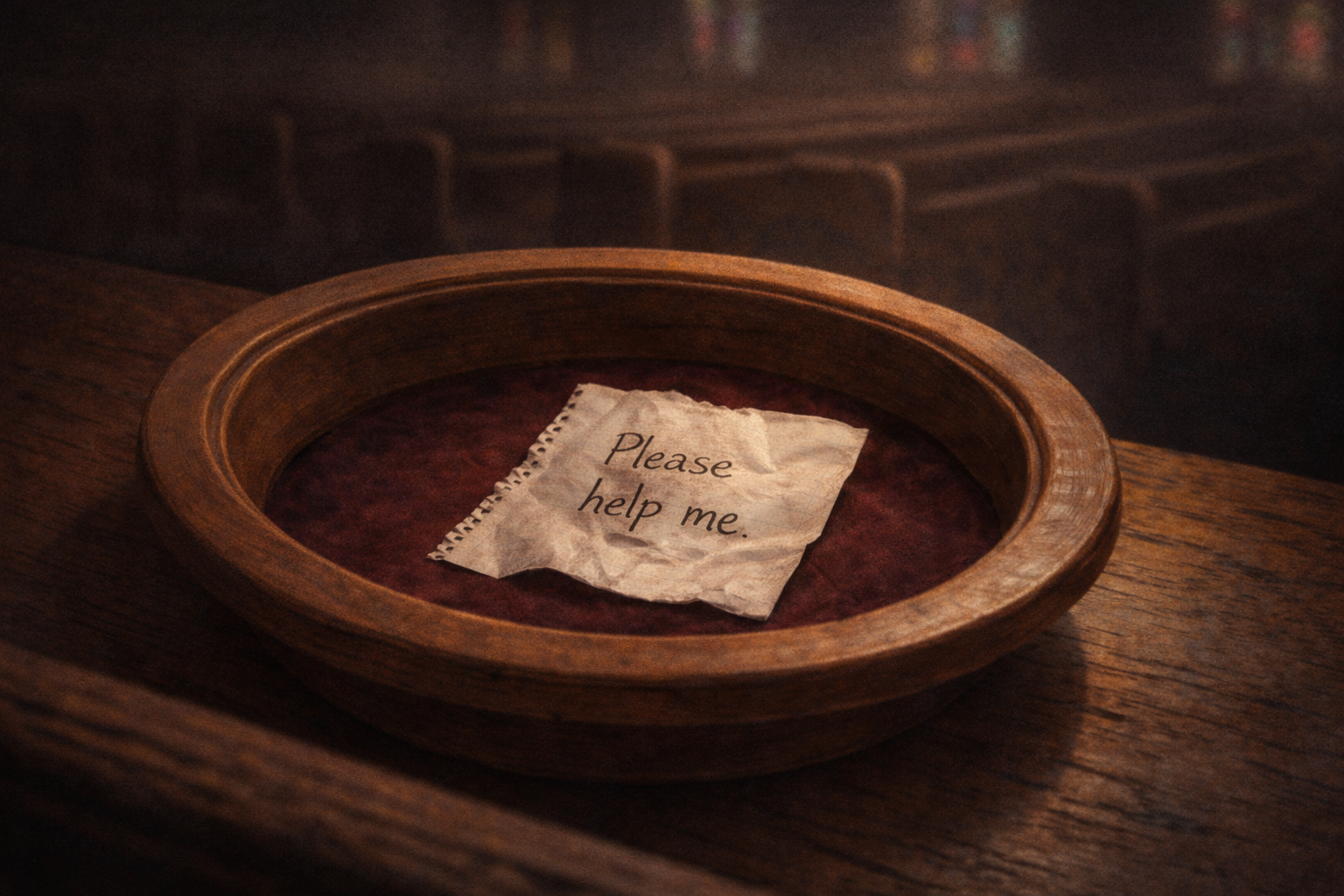
There was a Sunday where I was so lost I didn’t know what to do or where to go, so I put a note in the church offering tray that said please help me. Not for money, exactly, though money was part of it. Just help me. I didn’t know what help looked like. I didn’t know where to turn. And that was one of the most humbling things I’ve ever done, and also one of the most honest. I was asking. I wasn’t pretending anymore.
You aren’t waiting for a title to pick up trash. You aren’t waiting for money to notice the sunrise. You aren’t waiting for approval to become someone who shows up.
Greg Williams
The life I thought I was supposed to be living was gone. The trajectory, the plan, the identity I’d built all of it was ash. And I was standing in that ash, in my parents’ house, picking up trash on a beach that nobody cared about, learning to see the people around me, learning that nobody needs your permission to do something that matters. You aren’t waiting for a title to pick up trash. You aren’t waiting for money to notice the sunrise. You aren’t waiting for approval to become someone who shows up. So you just start. You walk. You carry a bag. You fill it. You set it down. You walk again. And one day the person who wrote I’m not much good for anything, but I can bend over and pick up a piece of paper, that person has picked up two miles’ worth of beach, and met the people who live there, and learned that being worth something has nothing to do with the business you built or the house you own or the amount of time you get with your children, even though those all matter. It has to do with whether you show up. So you do.
For Further Reading
Posts that connect to the themes explored here.
- More from Greg Williams — Additional posts on design, creativity, and teaching.