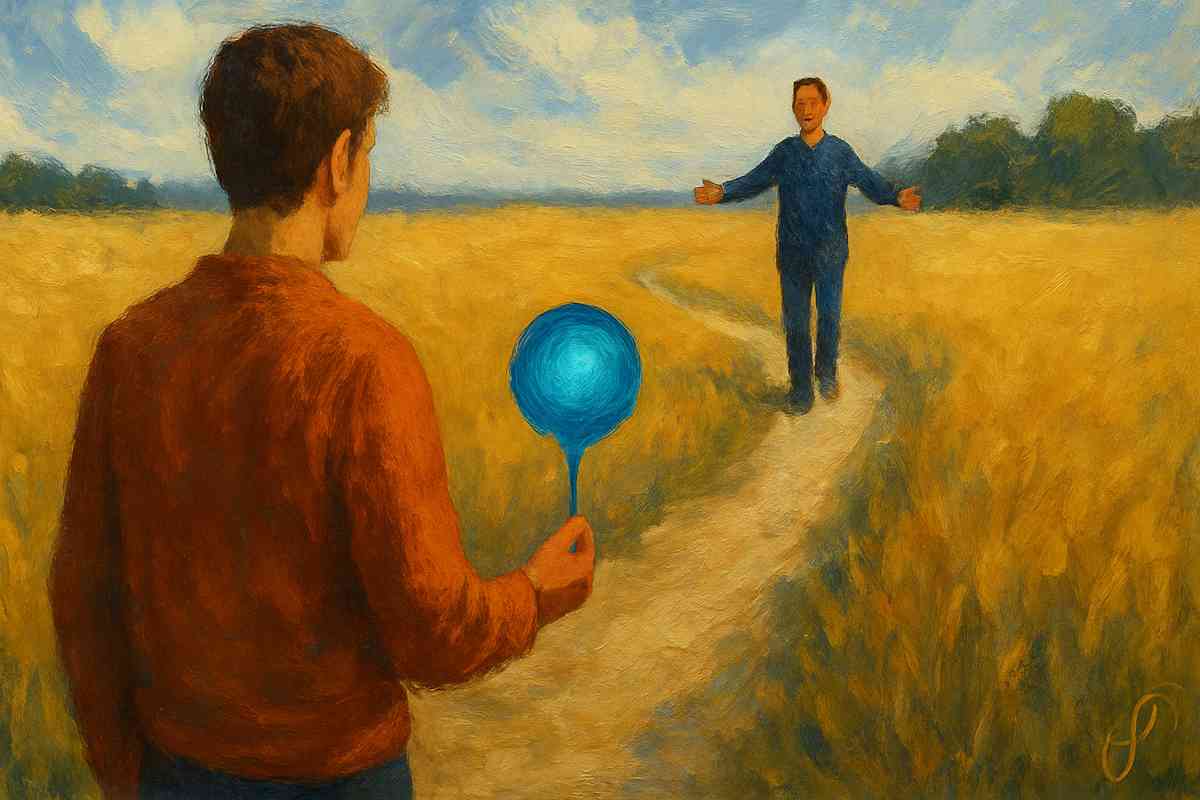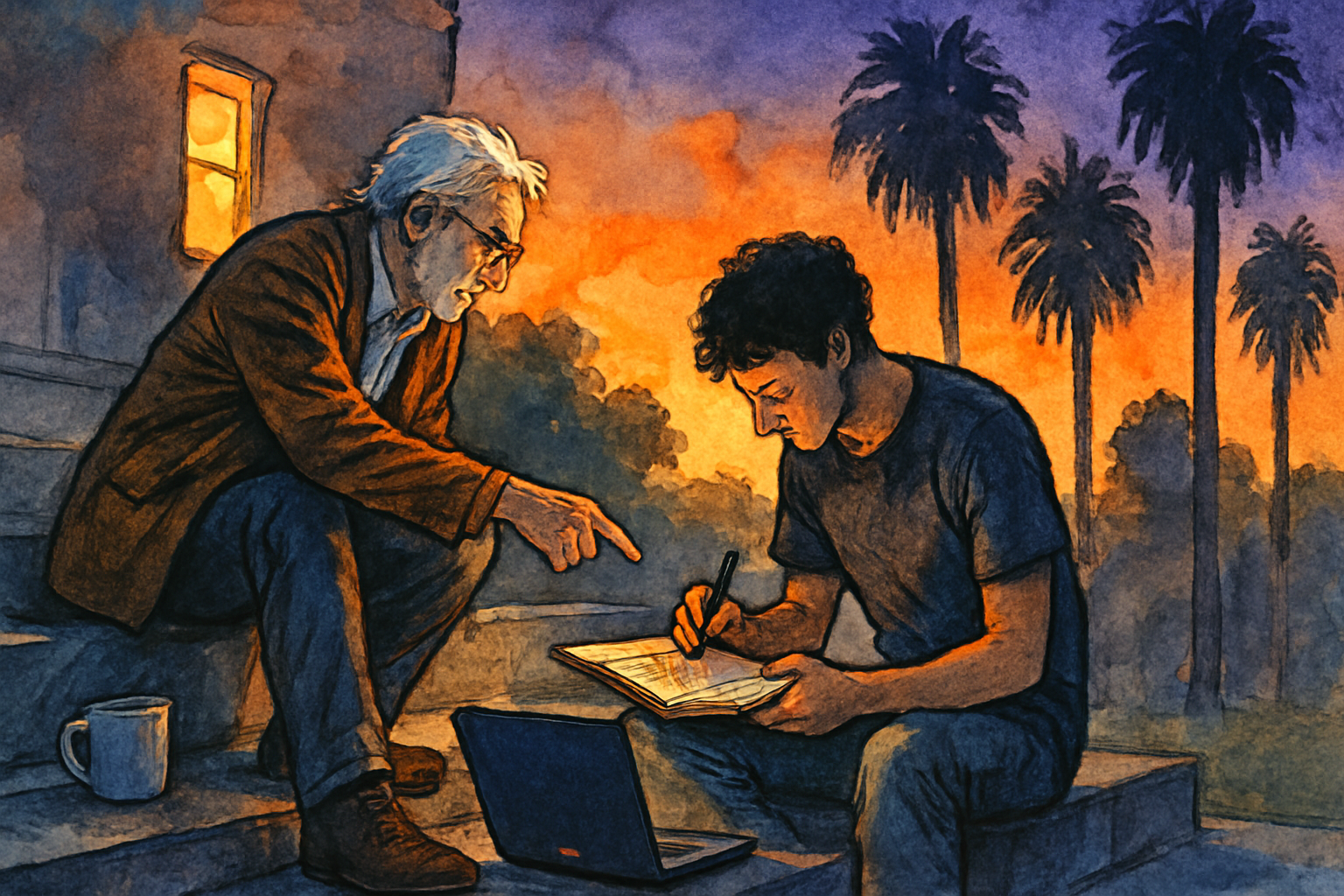
There was a moment about halfway through developing the 650 creativity exercises where I realized I’d been approaching the problem all wrong. I had written a parable to lead into one of the exercises, and it was technically correct—it explained the principle clearly, it was instructive, it hit all the logical points I wanted to hit. And it was dead. Nobody wanted to read it. I sat with that failed parable for a while, and then something clicked: what if instead of explaining what I was trying to teach, I just told a story that carried the same principle inside it? The distinction that formed in my mind was simple but it changed everything: stories don’t explain a principle. They install it.
That distinction changed everything about how I built the exercises, and honestly, it changed how I think about teaching in general. When you explain a principle to someone, they understand it. When you tell them a story that embodies that principle, they feel it and they remember it, and they carry it forward in a completely different way. There’s a difference between knowing how to be creative and being creative, and a lot of that difference lives in whether something was installed in you or just explained to you.
So I set a constraint for the 650 parables that would lead each exercise: nothing more than 150 to 200 words, something you could read in about thirty seconds, and joy was a required parameter. If it felt like homework, if it felt heavy or like therapy-excavation, nobody would do it. I needed stories that made you want to move, that gave you a sense of permission and permission through delight rather than obligation. Short, fun, uplifting or entertaining, not therapeutic. The constraint sounds simple, and it’s actually brutal because those 150 to 200 words have to do all the work. They have to create context, they have to pull you in, and they have to carry a principle that you won’t understand intellectually until you’ve done the exercise after reading the story.
Here’s what I noticed when I started testing this approach in the studio: the ones who read the parable first, then did the exercise, produced work that had something different in it. Not necessarily better technically, but more alive somehow. The story had gotten inside them in a way that an instruction couldn’t. If I just said, “Here’s the principle of composition I want you to explore,” they’d make work that was technically sound but hollow. If I told them a story about a painter who discovered something unexpected by breaking their own rules, and then had them do the exercise, the work would have that sense of discovery in it. The principle wasn’t abstract anymore; it lived in the story, and the story lived in their hands when they worked.
I think this is why people remember a well-told story from thirty years ago but forget an explanation they heard last week. Stories don’t just deliver information; they install a way of thinking, a permission, a possibility. They bypass the part of your brain that argues and edits and qualify things and go straight to the part that feels and experiences and knows. A parable about a monk learning to see teaches you something different than the sentence “Try seeing things from a different perspective.” The story becomes part of how you think after that; the principle stays in your head as an idea.
I built this deliberately into the exercises because I’d spent too many years in classrooms explaining principles that students understood but didn’t embody. You can sit and listen to a lecture about color theory and leave understanding the principles of color harmony, but you might never actually work with color in a way that breaks those rules beautifully because you never felt that permission in your bones. But if you read a story about a student who made something purple and gold when everyone else in the class made blue and green, and they did it because they weren’t sure it was right but they did it anyway, and it turned out to be the best thing in the room, something changes. That story installs a different kind of permission.
The parables I wrote weren’t meant to explain the exercises; they were meant to make you want to do them and to carry a principle inside you while you worked. Some of them were about failure, some about unexpected discovery, some about making something quickly and badly and finding truth in it. But all of them were stories, not lessons, because I learned that lessons stay in your head and stories get into your hands.
So when you’re trying to teach someone something true about creativity, or anything really, don’t explain the principle. Tell a story that the principle lives inside. Don’t say, “Constraints help you focus.” Tell them about the poet who wrote her best work in a thirty-minute window between two meetings because she didn’t have time to doubt herself. Don’t say, “Your first idea isn’t usually your best idea.” Tell them about the designer who almost submitted the first concept and then made one more version just to be thorough and that one more version changed everything about the work.
Here’s the thing I keep discovering the more I teach: people don’t change their minds because they’re presented with better logic. They change because they felt something true in a story and now they think differently as a result. The story gets inside and rewires something. And if you want to build exercises or lessons or any kind of teaching that actually works, that actually lands, you have to believe in that enough to spend those 150 words not explaining what you want to teach but telling a story that carries it forward. That’s how you install a principle instead of just announcing one.
Further Reading
- Design with Intent: Visual Storytelling Tools (IxDF) — Storytelling in creative communication
- The Tone of Typography: Visual Communication Guide (IxDF) — Communication and narrative in design