Exercise 5 of the Playing With Purpose series
The Exercise
The next time you’re somewhere with things worth looking at, a street, a park, a room with interesting light, anywhere, try this. Before you analyze, before you compose deliberately, before you ask yourself what would make a good image or a strong design or an interesting scene, just notice where your attention goes first. Not where you decide to look. Where it goes on its own, before you can stop it.
That involuntary pull is data. It’s your eye telling you something your brain hasn’t caught up to yet.
If you have a phone, take the photo before you think about it. Then take a second one after you’ve composed it consciously. Compare them.
Then answer these:
The reflection questions:
- What did your eye find before your brain engaged?
- Was the instinctive version different from the considered one? Better or worse, and in what ways?
- Have you ever made something and not been able to fully explain why it worked? What do you think was happening?
- Where else in your life do you trust your instincts? Where do you override them and defer to analysis?
- What would it mean to give the instinctive response more authority?
What I Learned When I Did This
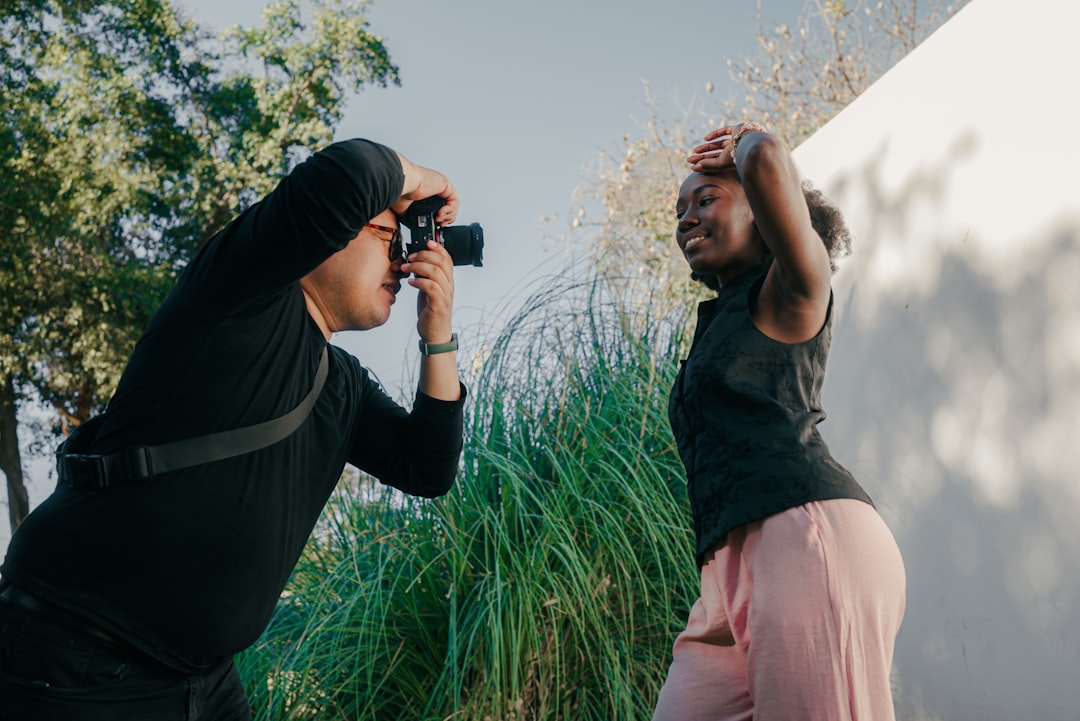
For most of my life I believed I wasn’t creative. I’ve told that story in another post and I won’t repeat it here, but the short version is that someone told me so when I was nine years old and I didn’t question it for six decades, which is its own kind of creative achievement in the wrong direction. And so when I picked up a camera and joined the Lakeland Shooters Photography Club, I wasn’t looking for a creative breakthrough. I was just doing something interesting, learning something new, being around people who were serious about their craft.
What I was not prepared for was the thing that started happening when I looked through the viewfinder.
I would see the shot before I could explain why it was a shot. My eye would find the frame, find the relationship between the foreground and whatever was happening behind it, find the moment right before the light changed or the person moved or the composition closed, and I would click, and then I would stand there for a second wondering what I’d just done. I started winning competitions. I started getting feedback from people who knew photography seriously, and the feedback was consistently about composition, about a sense of timing, about an instinct for visual relationships that wasn’t something I’d been taught.
I’m a graphic design teacher. I’ve spent decades studying why things work visually, building frameworks and systems and mathematical structures to explain composition and color and hierarchy. And here I was in my forties discovering that some of that knowledge had been sitting in my body the whole time, operating below the level of conscious thought, not because I’d studied it but because I’d been paying attention to visual things my whole life without giving myself credit for it.
The camera made visible what I couldn’t see directly: that there is a knowing that precedes analysis. The eye moves before the brain does. The hand reaches before the thought forms. This is not mystical, it’s just how pattern recognition works in humans, your nervous system has been processing visual information since birth and it builds models, and those models operate faster than conscious thought. The conscious thought comes in later and either confirms what the body already knew or overrides it, and overriding it is not always the improvement we think it is.
I teach students to analyze visual work, to understand why something works, to articulate the principles that explain a composition or a color choice or a typographic decision. That analysis is real and valuable and necessary. But the analysis is the post-mortem. It explains after the fact what the eye and hand already knew. The best designers I’ve encountered in twenty-five years of teaching are not the ones who could best explain the theory. They’re the ones who trust what they see before they know why, and then use the theory to refine and justify and communicate what their instincts found.
The exercise I’d give anyone who thinks they don’t have creative instincts is simple: catch yourself in the half-second before you think about it. Because that half-second is where you live, whether you know it yet or not.
Playing With Purpose is a series of creativity exercises for people who want to understand and reclaim their creative capacity. You don’t need to be an artist. You need to be curious.
Further Reading
- Building a Mentor Network (AIGA) — How mentorship transforms student outcomes
- AIGA Design Teaching Resource (AIGA) — Peer platform for educators sharing best practices