Exercise 7 of 20 from the Playing With Purpose Student Edition
From Book 4: The Wall (Exercises in Resistance)
The Parable
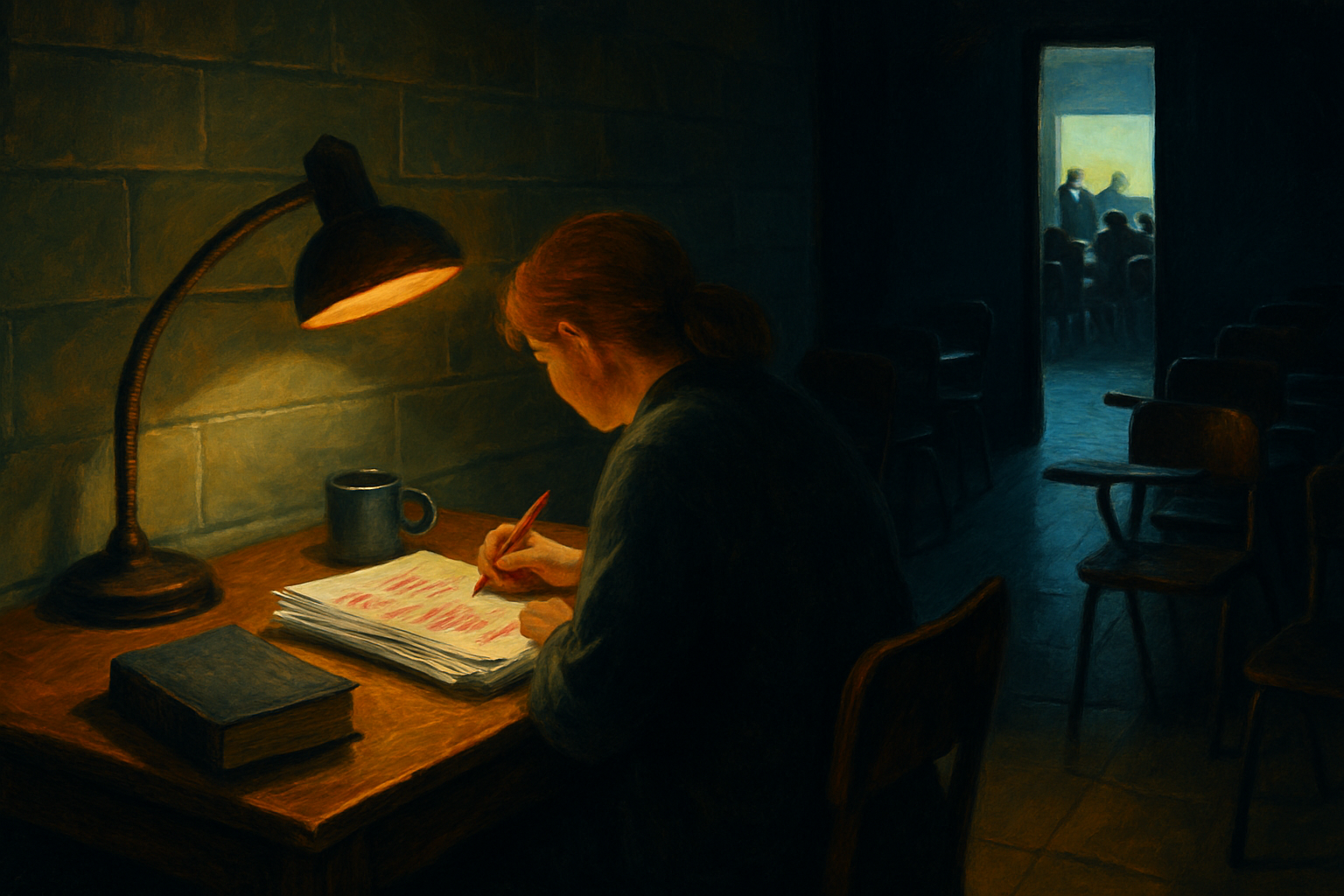
Two artists complained about procrastination. They both avoided their studios for weeks. A mentor asked them each separately, ‘What specifically are you avoiding?’ The first artist said, ‘I’m stuck on the third movement. I don’t know how to bridge it.’ The second artist said, ‘The music is actually good, but what if people hate it? What if they judge my taste?’
These are completely different problems. The first artist had a technical problem. She needed help with the music itself. The second artist had a judgment problem. She needed permission to be flawed and public anyway. The mentor gave the first artist one question: ‘What if you skipped the third movement for now and wrote the fourth?’ The first artist was back at work in ten minutes. The mentor told the second artist, ‘Your taste doesn’t get to be edited by what others might think.’ She went to the studio and recorded badly on purpose, just to prove judgment couldn’t stop her.
Same symptom. Completely different diseases. The cure depends on which wall you’re actually facing.
The Exercise
Right now, notice something you’re procrastinating on. Not vaguely. Specifically. A writing project, a piece of music, a drawing, a decision you’re avoiding. Name it in one sentence.
Ask yourself this question in writing, and answer honestly: Am I avoiding the WORK itself, or am I avoiding the JUDGMENT that will come after? Write a paragraph about which one it is. Am I stuck because I don’t know how to do the thing technically? Or am I stuck because I’m terrified of what people will think once they see it?
Once you name which problem you have, you know which tool to use. If it’s a work problem, you need help with the craft. If it’s a judgment problem, you need permission to be imperfect and public anyway. Write down one specific action for whichever problem you actually have.
Reflection Questions
1. Have you ever confused these two problems before? What happened?
2. If you could remove judgment completely, would you actually do the work right now?
3. What’s one small, genuinely imperfect version of this work you could share to prove judgment won’t kill you?
What We Were Trying to Do
Procrastination is not a character flaw. It’s information. It’s telling you something is wrong. The question is what. If you’re avoiding the work because you lack a skill, staying stuck and feeling guilty won’t teach you the skill. You need coaching, examples, practice.
But if you’re avoiding the work because you’re afraid of judgment, more practice won’t help either. You need permission to be wrong in public. You need evidence that vulnerability doesn’t destroy you. These require completely different solutions. Most people keep trying the same solution for both problems and wonder why nothing changes.
Why It Matters
This distinction is freedom. Once you name which wall you’re facing, you stop fighting the wrong battle. You stop thinking you need confidence when you actually need skill training. You stop thinking you need skill training when you actually need courage. Knowing the difference is how you actually move.
You also stop blaming yourself for weakness. You’re not weak. You’re either skilled or not skilled. You’re either willing to be judged or not willing. These are solvable problems with clear solutions. Procrastination starts to feel like information instead of failure.
References & Further Reading
(Grant, Adam. Originals: How Non-Conformists Move the World. Viking, 2016, p. 88-102) Grant’s research on procrastination shows that people who procrastinate strategically often produce more original work, but only if their procrastination is about judgment tolerance, not skill acquisition. The type of procrastination matters enormously.
(Pressfield, Steven. Turning Pro: Tap Your Inner Power and Create Your Life’s Work. Black Irish Books, 2012, p. 74-79) Pressfield distinguishes between the work itself and the resistance to exposure. Understanding which you face determines whether you need training or courage.
Going Further
Many people discover they have both problems at once. You’re not sure how to write the opening AND you’re terrified of judgment. That’s fine. Decode them separately. Fix the skill problem first, then tackle the courage problem. One at a time gives you better odds.
This exercise gets easier the more you use it. Within weeks, you’ll recognize procrastination as it happens and immediately know which kind it is. That recognition itself removes most of its power. You’re no longer mystified. You’re dealing with a problem you can actually name.
This exercise is from the Playing With Purpose Student Edition by Greg Williams. The complete series of 650 exercises across 10 books is planned for publication in summer 2026.
This is practice. Nobody will grade this.