Exercise 15 of 20 from the Playing With Purpose Student Edition
From Book 8: The Leap (Exercises in Shipping)
The Parable
David had applied to art school twice. Been rejected both times. He’d started a podcast that lasted four episodes. He’d written a screenplay that never got made. He’d submitted stories to literary magazines and received rejections form the magazine editors. Somewhere in his twenties, David started thinking of himself as someone who fails at creative work. The word ‘failure’ meant something was wrong with him.
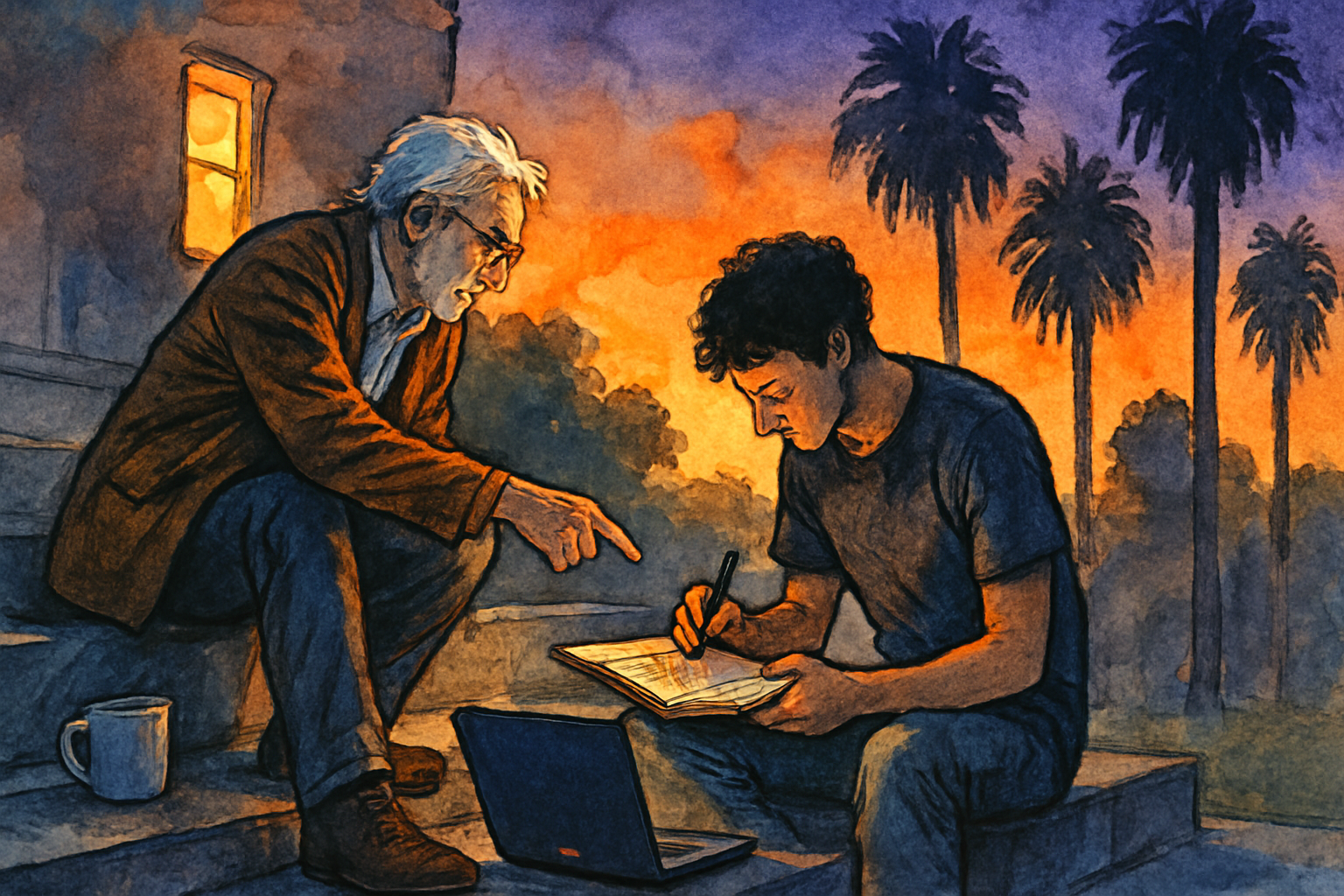
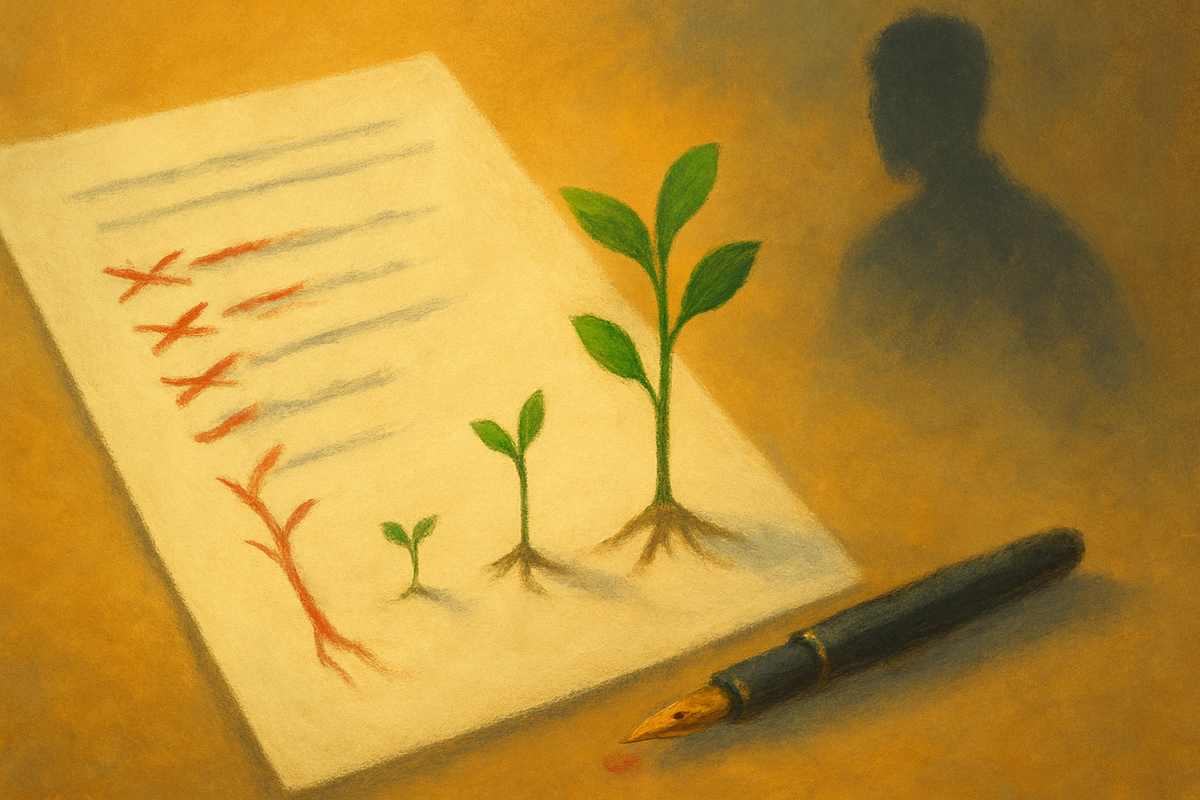
Then a mentor asked David to make a list. Not of successes. Of failures. Everything that didn’t work. Everything rejected. Every project abandoned. David wrote for an hour. Rejection after rejection. Failed business idea. Failed relationship where he’d tried to write his way through the pain. On the second page, something shifted.
David stopped reading these as proof of inadequacy. He read them as proof of courage. Every failure meant he’d tried. Every rejection meant he’d been brave enough to risk one. The long resume was exactly backwards from what he’d believed. It wasn’t evidence that he wasn’t a creative person. It was evidence that he was. Because he kept trying even though it sometimes didn’t work. That’s the definition of creative courage. A long failure resume means you’ve earned it.
The Exercise
Make a list of your creative failures. Projects that didn’t work. Ideas rejected. Submissions declined. Performances that flopped. Works you abandoned. Be thorough.
Write them in resume format. Title, date, description. Make it look official.
Read through what you wrote. Notice the pattern. Notice how many times you tried.
Count the items on your list. The longer it is, the more risks you’ve taken.
Save this resume. Add to it as your creative practice continues. A growing failure resume is a sign of expanding courage, not declining skill.
Reflection Questions
1. How does it feel to list your failures this way instead of hiding them?
2. What does the length of your failure resume actually prove about you as a creative person?
3. Which failures are you most proud of now that you’re looking at them this way?
What We Were Trying to Do
The misconception: creative failure means you’re not talented or not meant to create. We see a rejection or an unfinished project as evidence of permanent inadequacy. We believe that people who create successfully don’t have failure resumes. We believe they got it right the first time, or second time, or fifth time.
The correction: everyone who creates has a failure resume. The difference between people who keep creating and people who stop is simple. The people who stop see their failures as proof they shouldn’t try. The people who keep going see their failures as evidence they’re trying. The failure resume makes this visible. It shows you that failure and creative practice are the same thing.
Why It Matters
When you reframe failure as evidence of courage instead of evidence of inadequacy, something changes in how you risk. You stop hiding your failures. You stop pretending they didn’t happen. You integrate them into your identity as a creative person.
A long failure resume means you’ve earned the right to succeed. You’ve paid the price of admission through hundreds of small and large risks. This matters because it gives you permission to keep going even when the next thing doesn’t work.
This is where resilience lives. Not in pretending you’ve never failed. In claiming every failure as part of your creative education. That’s real confidence. Not the kind that comes from winning. The kind that comes from standing back up.
References & Further Reading
Carol Dweck, ‘Mindset: The New Psychology of Success’, Random House, 2006, Chapter 3: On the relationship between effort, failure, and growth in creative domains.
John Boiler, ‘The Creative Confidence: Reclaiming Your Creative Power’, The Life Crafted, 2013: On redefining failure as learning in creative practice.
Seth Godin, ‘The Practice: Shipping Creative Work’, Portfolio, 2020, Chapter 2: On the necessity of many failed attempts in creative development.
Going Further
Don’t just make this list and put it away. Reference it when you’re considering a creative risk. Look at the resume. Recognize that you’ve survived every failure on it. You’ll survive the next one too.
If your failure resume is shorter than you expected, that’s important information. It means you haven’t been taking enough risks. Use this as permission to start. Your failure resume will grow and that’s exactly what you want.
This exercise is from the Playing With Purpose Student Edition by Greg Williams. The complete series of 650 exercises across 10 books is planned for publication in summer 2026.
This is practice. Nobody will grade this.