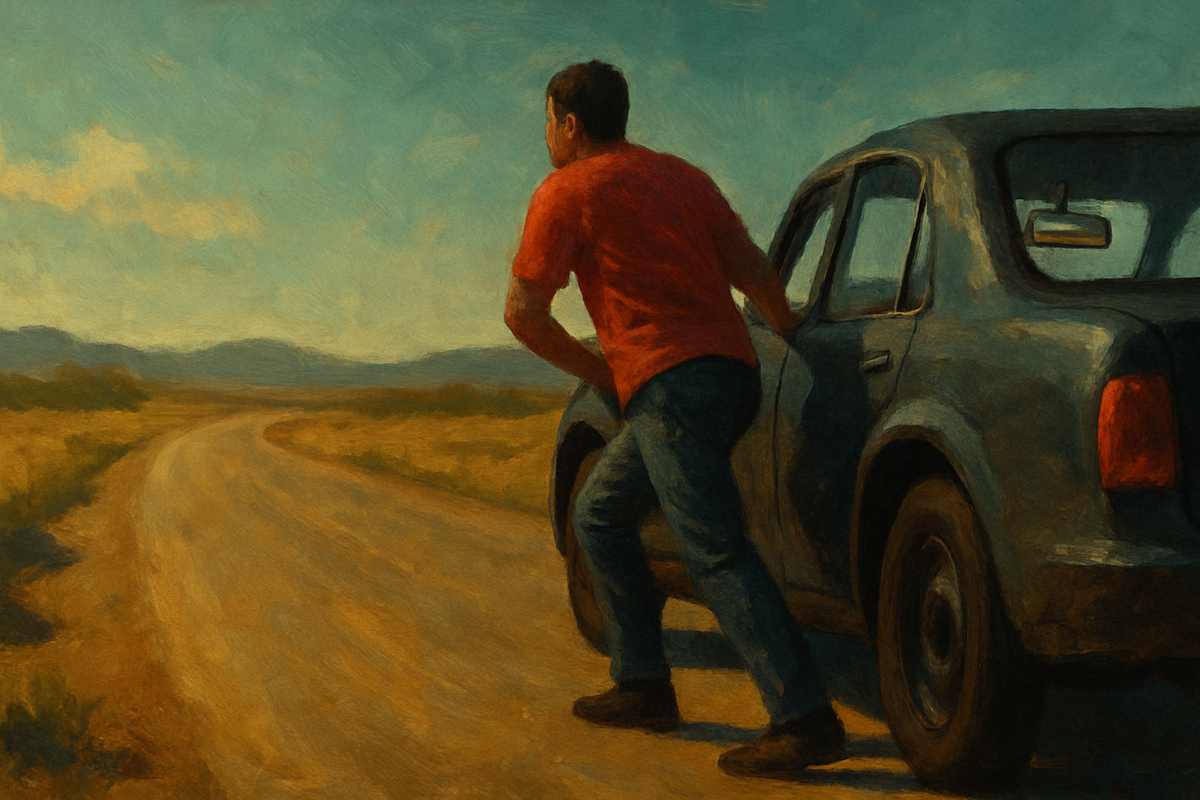
There was a version of me at thirty-five that would have been impossible to talk to about this, and I know that because I was him, and he had all the answers, and the answers all pointed in the same direction, which was up. Bigger house. Newer car. Private school for the kids. The corner office with the view and the title on the door and the business cards with the embossed lettering, and every single one of those things felt like proof, you know, proof that the plan was working, proof that the kid from the shadow had finally stepped into his own light, and I chased that feeling like it was oxygen.
And then I lost all of it. Not slowly, not with warning signs I could have read if I’d been paying attention, but fast, three months, gone. The business collapsed on its own. C. filed for divorce. The house went. Access to my kids went. The story I’d been telling myself about who I was and what my life meant went with it, and I was thirty-eight years old, broke, living in the back of my parents’ house, wondering which part of the plan had been the lie, the part where I built it or the part where I believed it would last.
And here’s what nobody prepares you for, you know, not the loss itself, because people talk about loss all the time, but what happens after, when you start to rebuild and you realize you don’t want to build the same thing again. Because once you lose everything and find out how to survive without it, you realize that what was driving you before is not what’s driving you now and not really what makes you happy. The car was a payment. The house was a mortgage. The private school was a bill that came every month whether the business was good or not. And every one of those things I thought I wanted was actually a weight I was carrying, and when they were gone, after the grief passed, after the terror settled, there was this strange, quiet thing that showed up, and it took me a while to recognize it. Relief.
I live in a townhouse now with Terri. It’s not impressive by any standard the old version of me would have recognized. A new car would just add debt. A bigger TV would just add noise. After twenty-five years of teaching, I’m just now making what I earned when the business collapsed, and that fact would have destroyed the thirty-five-year-old me, it would have felt like failure on a scale he couldn’t process, but from where I’m sitting now it just feels like the truth, and the truth is manageable in a way that the performance never was.
The hardest part of this whole shift wasn’t the financial adjustment or the lifestyle change, it was learning to treat myself well. Not from ego, not from some inflated sense that I deserved things, but from what I started to think of as a quality point of view. Like if this person, meaning me, if he were someone I met at a dinner party and heard his story, would I think he was worth knowing? Worth caring about? Worth a second chance? And the honest answer was yes. Which made the way I’d been treating myself for years pretty hard to justify.
You know, I can look back now at every version of myself, the child who did dumb things because he didn’t know better, the teenager who thought he understood the world, the man who built something bigger than he could hold and then watched it collapse, and I can love them all. Not because they were right. Not because they made good decisions. But because they were doing the best they knew how. Not the best possible. Not the best in hindsight. The best they knew how. And that’s a different standard, and it’s the only one that lets you actually move forward instead of staying frozen in the moment you’re most ashamed of.
So if you’re in the middle of your own version of this, if the thing you built is wobbling or the plan you followed turned out to lead somewhere you didn’t expect, I’m not going to tell you it gets better, because that’s too simple and you’re smart enough to know it. What I’ll tell you is that the thing driving you right now might not be the thing that actually makes you happy, and finding that out is painful and slow and worth it. And sometimes the life you build after the one that fell apart is smaller and quieter and more honest, and that turns out to be exactly enough.
Keep Reading
- He Showed Up for the Wrong Job and Got Two Stanley Cup Rings
- When You Stop Learning, You Start Dying
- Nobody Gets There the Way They Planned
- The Lakeland Santa
Go deeper: What Creativity Actually Is · All Primers